
Ireland is a large employer of MedTech professionals with 350 companies employing more than 40,000 people, according to the Industrial Development Authority. 14 of the world’s top 15 medical device companies have a base in Ireland and the country is the second largest exporter of MedTech products in Europe (after Germany), generating about €13 billion (£11 billion) worth of exports a year.
While the big multinational companies account for much of the sector’s output, one in five of those working in the sector are employed directly by Irish-owned MedTech companies. The homegrown companies can draw on “a deep pool of experience and highly trained talent. This is boosted by a fertile ecosystem that integrates industry, research and the clinical community to promote high- quality innovation,” according to Deirdre Glenn, Director, Life Sciences Sector at Enterprise Ireland.
The west of Ireland accounts for about 40 per cent of the regional distribution of medical device employees in Ireland. Big employers in the area include Medtronic and Boston Scientific. Start-ups in Galway may be led or mentored by individuals who “cut their teeth” in one of these firms. MedTech start-ups benefit from the cluster where their level of experience and skill set are highly regarded. This level of activity is also driven by a suite of different financial, institutional and knowledge supports, as well as by people who are enthusiastic about futureproofing Ireland’s health system.
Galway city boasts an impressive line-up of start-up and scale-up companies including Bluedrop, HidraMed Solutions, Loci Therapeutics and NuaSurgical.
A closer look at Galway’s innovation environment
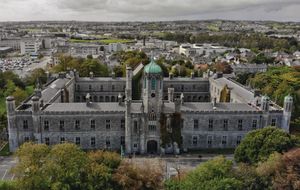
Galway’s vibrant MedTech scene is enhanced by the city’s two universities, GMIT (the Galway Mayo Institute of Technology) and NUI Galway (National University of Ireland Galway). The two universities are just five kilometers (three miles) apart from each other. Start-ups that originated in these universities or were “spun in” are designing and developing solutions for unmet clinical needs in locations such as the Business Innovation Centre (BIC) in NUI Galway, which provides office and lab space as well as mentoring and access to technical expertise.
Despite BIC’s clear success, there is a need for more suitable space, according to Fiona Neary, Innovation Operations Manager at NUI Galway. “This is the missing link: the need for wet labs and fully equipped bio buildings is high and currently underserved for the smaller start-ups. But the difficulty is the high cost in pulling buildings such as this together. It is easier to build space where a large corporate is ready and waiting to pay - as opposed to innovation space servicing a regional need and trying to develop the ecosystem.”
Galway’s MedTech scene also benefits from Medical and Engineering Technologies (MET) Gateway, which is an interdisciplinary applied research centre, dedicated to supporting research, development and innovation activities in the MedTech, life sciences and engineering sectors. MET was founded by Enterprise Ireland in 2016 and is located at the GMIT campus, which also hosts an Innovation Hub (or iHub) acting as a catalyst for MedTech start-ups in the city.
Occupiers of iHub include some start-ups out of the BioInnovate programme on NUI Galway campus such as AuriGen Medical, who are working on the first heart implant to treat atrial fibrillation, something that puts patients at risk of stroke and arrhythmia. Other challenges in patient care being addressed by iHub-housed start-ups include child-friendly solutions for kidney reflux developed by Kite Medical. Symphysis Medical and Venari Medical are located there too.
A diverse support network
The BioInnovate programme is affiliated with Stanford University’s globally renowned BioDesign program and encompasses the proven needs- led Innovation approach to create novel healthcare solutions to previously unmet, under-met and unrecognised problems. BioInnovate is ideally located to enable teams of professionals from a network of academic, clinical and industry settings to collaborate and enhance the future of healthcare and ultimately improve millions of patients’ lives worldwide. Key achievements of BioInnovate in the last 10 years since its inception include €80m (£66 million) invested, eight high potential start-ups recognised, 22 companies formed, over 250 employees trained and being recognised as a global leader in needs-led innovation.
Something that has spurred innovation throughout Galway and the wider west coast is the support provided by organisations such as Health Innovation Hub Ireland (HIHI) that drive the dissemination of expertise and knowledge. HIHI’s goal is to help MedTech start-ups access the Irish healthcare system. To achieve that, it helps in identifying the best clinical teams and locations for them to conduct pilot studies on their products. The team at HIHI welcomes ideas from prospective companies, helping on such things as validating the problem and identifying funding sources. HIHI is a national programme which opened an office in NUI Galway to support start-up companies while promoting and encouraging innovative ideas from our healthcare teams, fuelling the future start-up pipeline.
Furthermore, as a national entity, HIHI can share learning and expertise that has supported the success in the west to other locations in Ireland.
Support is also provided by Cúram at NUI Galway, which is the part of Science Foundation Ireland that focuses on medical devices research. The European Institute for Innovation and Technology (EIT) is also playing its part and its subsidiary EIT Health is another stitch in the tightly knit weave supporting Galway’s MedTech activities.
Its priority is tackling the silos that often impede MedTech innovation, whether they exist between different countries, different institutions or different companies. The Western Development Commission, which promotes social and economic development in the Western Region (the counties of Donegal, Leitrim, Sligo, Mayo, Roscommon, Galway and Clare) also plays an important part.
From bench to bed
Underpinning future success in Galway is the ability to conduct research/product development and advancement in new innovations from bench to bed in the region. This has been enhanced by the Clinical Research Facilities in NUI Galway augmenting research excellence with on campus facilities and infrastructure. The HRB Clinical Research Facility Galway provides the infrastructure, physical space, facilities, expertise, and culture needed to optimally support bioscience. It focuses on studies aimed at understanding a range of diseases and translating this knowledge into regulatory approved advances in patient care. Co-located on hospital grounds, the facility is a joint venture between Galway University Hospitals (GUH), the Saolta network of hospitals, and NUI Galway.
In addition to the innovation space provided on campus at Galway’s two universities, there is also off-campus office space and mentoring available at The Porter Shed, a coworking and collaborative space for technology focused enterprises. The Porter Shed is the first building of the Galway City Innovation District, an ambitious blueprint for the city’s high tech and life sciences- led future which aims to cluster Galway City’s entrepreneurs, start-ups, accelerators and incubators in an urban setting.
Working together
In relation to the prominence of tech innovation in Galway, it tends to work well because there are the experts to guide the upcoming talent and teams who have gone through the process early on and have learned from them. There are start-ups working on similar things but in Galway’s tight-knit community this is not an impediment to collaboration. As Fiona Neary puts it, “Galway is a small region but enormous in connectivity. By working together, Galway will move mountains to be the leaders in this space globally.”