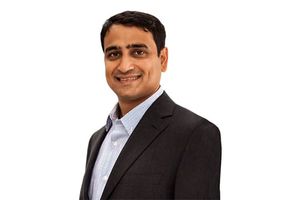


Dr. Jennifer Gaughran is an assistant professor of physics at Dublin City University, where she also leads the Grain-4-Lab research team. This team’s mission is to make compostable lab consumables (such as petri dishes) using the waste from Irish breweries and distilleries, thereby addressing two environmental challenges simultaneously. The first challenge is that waste streams from breweries and distilleries in Ireland are underutilised; the second challenge is that labs use consumables that are made from fossil fuel-based plastics, and these end up being incinerated or in landfill.
The Grain-4-Lab team’s solution involves transforming these waste streams into polylactic acid, which can be used to manufacture compostable bioplastics for use in the lab. Grain-4-Labs has been awarded €2.4 million (£2.56 million) by Science Foundation Ireland (SFI) to help scale up the process.
Tell us a bit about yourself

I have been an Assistant Professor in the School of Physical Sciences at Dublin City University since 2017. I have been the principal investigator on various projects over the years and I like to work across lots of different disciplines: physics, biomedical diagnostics, and advanced materials are examples. I have worked as a Research Assistant in the Biomedical Diagnostics Institute, a secondary school science teacher, and as manager at the Advanced Processing Technology Research Centre in Dublin.
Congratulations on your recent SFI funding. How did the idea of Grain-4-Lab come about?
Well, the pandemic certainly helped – we had lots of time on our hands! My colleague, Brian Freeland, became aware of the Plastics Challenge, run by Science Foundation Ireland. (This initiative promotes innovative STEM-led solutions to enable the sustainable use of plastics in a circular economy, restoring the oceans’ health, and making better use of the Earth’s finite resources). Brian is a bioprocessing engineer, and he was thinking about making bioplastic from a waste material. At the same time, I was thinking that labs are producing lots of waste in the form of consumables that are being sent to landfill. So, between us, we started considering how we could find a new way to deal with both problems. This was back in October 2020.
How is the research going?
The research is going well. We are prototyping the bioplastics in the real world and ticking all the boxes in terms of ISO standards, but of course we sometimes meet resistance to change among scientists. Even though scientists are innovators, we are also creatures of habit and may not wish to change something that’s currently working quite well. Our team tries to be guided by other users and we are working hard to convince people to move to greener solutions. So, there are two sides to consider: the regulatory one and user acceptance. What we’re hoping for is a direct swap, so that the people do not have to change their day-to-day practices but simply move over to our new petri dishes.
How can the physical/built environment encourage better innovation among scientists?
I remember when we moved to our new lab space, one of our biggest challenges was how to lay out the new lab so that it is useful now and also into the future. We need to future proof the equipment and think about new ways of doing experiments that could emerge. The way the equipment is set up and the infrastructure is critical, and even though scientists are good at improvising with what they have, they shouldn’t need to do that. So, the end-user should always be involved in the decision-making and the design element.
Science is a broad term too, so chemists and biologists need different environments, but because we are all cross-disciplinary players now, that space needs to be adaptive.
If you had unlimited money but limited space (no more than 1,000 square metres), what would you build?
I do lots of experiments, and for me one important feature would be piped gas. I need to use gases such as argon and nitrogen, and I prefer to get them via a pipe rather than in a canister. Other things to prioritise would be good water supply, lots of electrical sockets, plenty of Internet routers, plus practical everyday stuff like sinks and fridges.
I would also provide two different types of space: dark space for doing experiments with lasers, plus big open spaces where you can meet others. Those big spaces are good for your mental health!
Sustainability is very important across the whole building, so motion sensor lights and power metres would be a feature too.
Facilitating remote working is important, so even if you spend most of your time working in a lab or lecturing, I would still encourage some remote working. The ability to do write-ups at home is useful, and good for the environment, too (by reducing transport-related emissions).
In terms of driving innovation, how important is cross-discipline cooperation?
Cross-disciplinary work is very important; it’s the way of the future. Inspiration comes in many ways: for example, hashing out ideas with other people is one way, chance encounters are good too. Cross-disciplinary work is the way to go; working in one little bubble doesn’t work anymore, anyway.
Can the design of a building foster such cooperation?
I really think it can. Space that is fit for purpose, that’s what you need. One aspect of this is having communal spaces where people can mingle, interactive hubs with whiteboards and coffee, and the like. Nobody has a planned timeslot for sitting down on their own to have an idea. Interaction is important but having said that, a building should also facilitate quiet time. A quiet space, so you can take a step back and think. So, the building should provide that important balance between interactive time and quiet time, and it should be able to adapt to the future too.