

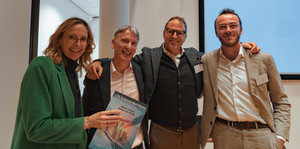
The Life Sciences Real Estate team held its first networking event on 8th November 2022, at Leiden Bio Science Park in the Netherlands.
The half-day forum, entitled “The Future of Life Sciences Real Estate”, was a huge success, thanks to the contribution of wonderful speakers, panelists, and participants.
This event was a great opportunity for professionals from different disciplines to get acquainted with one another while discussing three key topics: the importance of life sciences real estate; what scientists want from their buildings; how to invest.
Special thanks go to Kadans Science Partner, who provided the venue, the Plus Ultra Leiden building, shown below and to Tomris Türkis for the photography.
How the event unfolded
Maurizio Grilli and Stephen Ryan from the Life Sciences Real Estate team opened the proceedings with a warm welcome and a brief overview of the team, how it came together and its vision.
The focus then turned to the first topic of the day: the importance of life sciences real estate.
The importance of life sciences real estate
Anja van de Meer and Bart Zwaan from Leiden Municipality recounted the history of Leiden Bio Science Park and how vacant polder lands behind Leiden Central Station, next to the academic hospital, became the successful science park and innovation district that it is today. Governmental participation regarding economic developments and in spatial developments were mentioned as two key success factors. Receptiveness towards new investors and companies by showing them the “red carpet” treatment is another one.
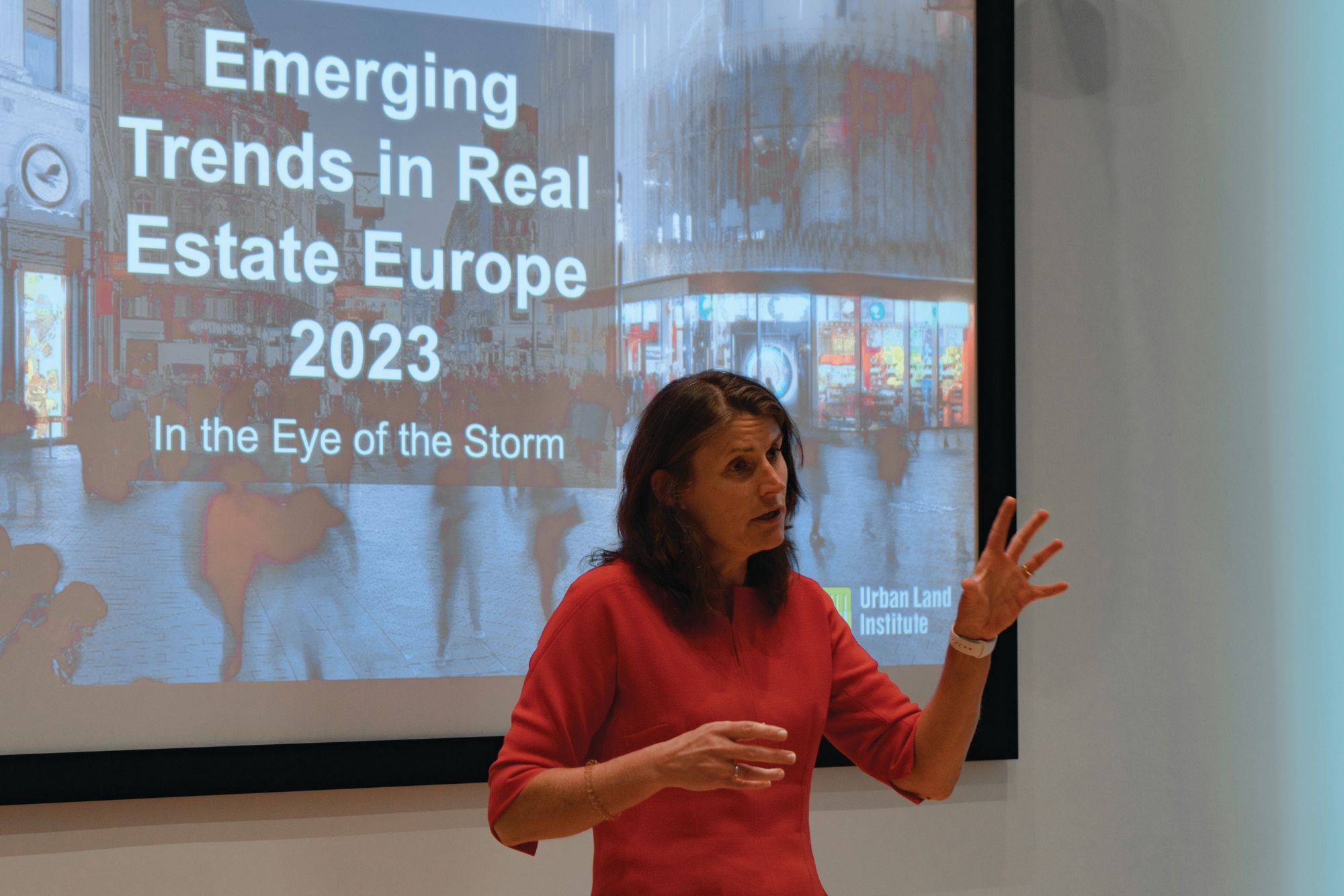
The next speaker was Lisette van Doorn, CEO of Urban Land Institute (ULI) Europe, who noted how life sciences real estate is ranked no.2 in terms of investment prospects in 2023 according to the ULI’s most recent Emerging Trends in Real Estate Europe survey, which had been released the week before. The sector’s attractiveness is driven by long-term demographic trends and the associated growth in healthcare spending and scientific R&D.
What scientists want from their buildings
The next section of the event looked at the needs of scientists. Johan van Gerven, Director and Head of Development Netherlands at Kadans Science Partner, shared some of his experience on this matter. He noted that building the right ecosystem gives viability and longevity to real estate. Johan underlined the importance of understanding how to facilitate collaboration in a physical setting.
Stephen Ryan, founder of Life Sciences Real Estate, then summarised the findings from his interviews with four scientists. These interviews, which are published in the Science section of the Life Sciences Real Estate quarterly magazine, are intended to help participants in the real estate sector to better understand what scientists actually need from and appreciate in their built environment.
One scientist believes that “to get the most from cross-disciplinary cooperation you need colocation. It is good to let the chemists, the physicists, the engineers, the data scientists, and other specialists mingle. Problem solving from the ground up requires more than one discipline, it needs the close interaction of many disciplines.”
Another scientist had noted that “What works particularly well is ‘walking past space,’ where casual exchanges are facilitated. You are much more likely to have a light bulb moment when you can get out of your tunnel, so to speak (...).”
The insights available from speaking to scientists are incalculable, Stephen noted; however, there is a “vocabulary gap” between the real estate and scientific worlds, and this is why an online glossary of terms was launched.
Panel discussion
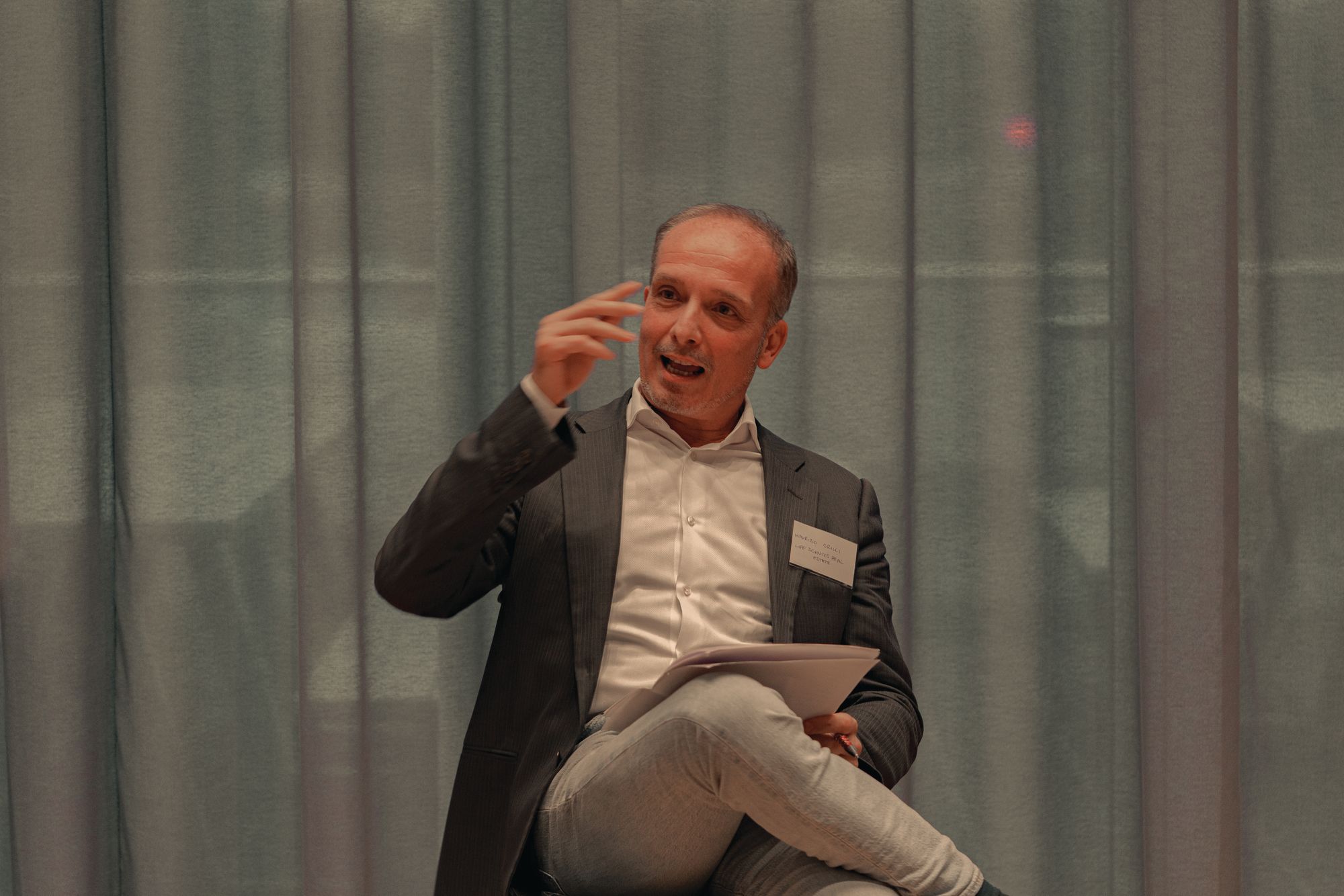
After a break for coffee and networking, the event moved on to a lively panel discussion with experts from the life science and real estate sectors: Maarten Frouws of Fidelity; Marieke Stokkelar from Kennispark Twente; Olle Overbosch from ASR Real Estate; and Remco van der Mije from GARBE Institutional Capital. The panel was moderated by Maurizio Grilli.
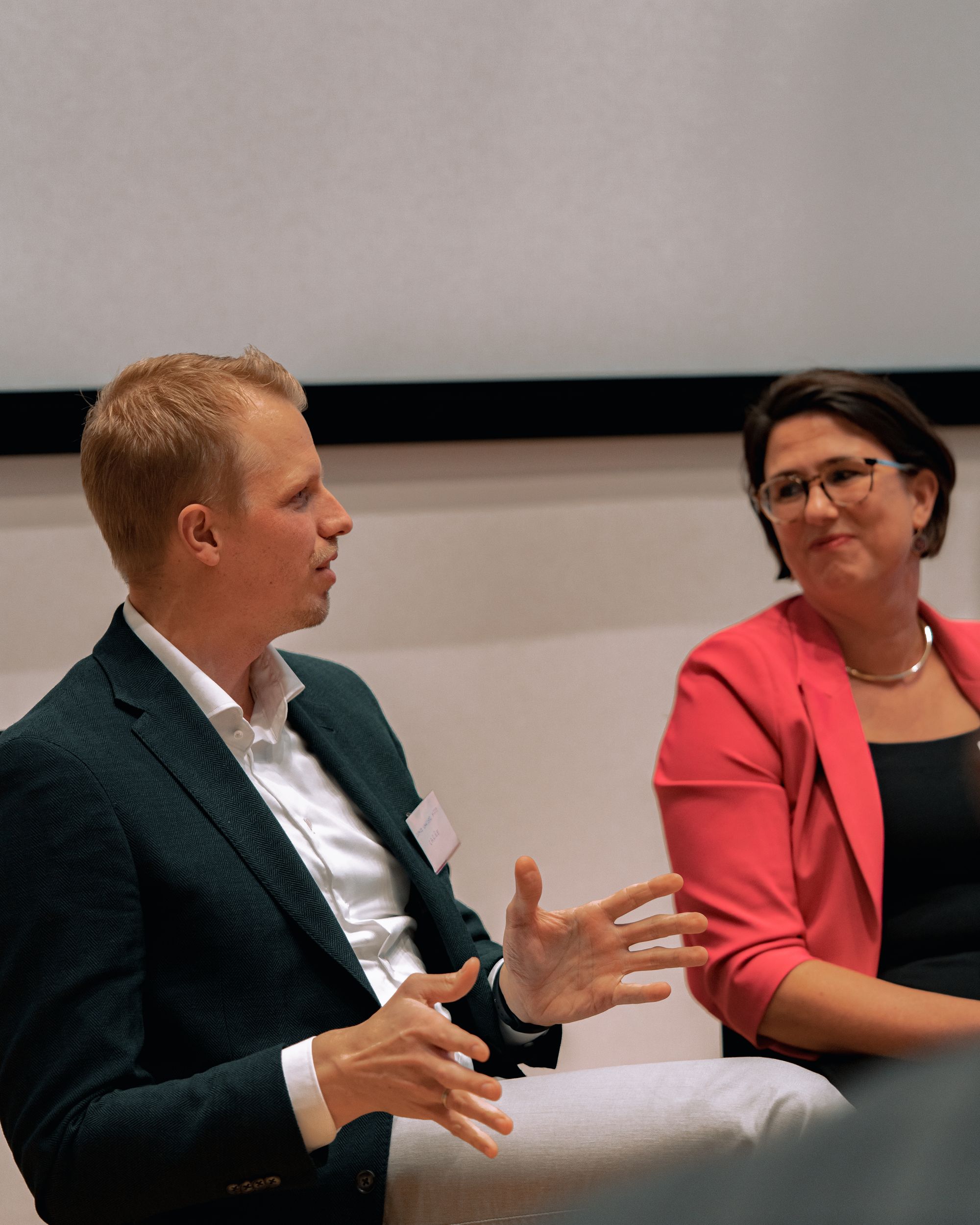
The panel’s focus was on investment and during the discussion, it was noted that one of the appealing aspects of life sciences real estate is its potential for attractive risk-adjusted returns. Another attraction is its low or negative correlation to other asset classes. Investing in life sciences real estate can help to diversify a portfolio and reduce overall risk.
Wrapping up the event
Maurizio Grilli and Stephen Ryan brought the event to its conclusion by setting out four ways in which the worlds of science and real estate can be brought closer together.
- The first way is the publication of the quarterly magazine. Each issue is a treasure trove of information on life sciences real estate in Europe.
- The second way is to address vocabulary gaps. This can be done by using the online glossary of definitions.
- The third way is to host regular networking events. Following the success of Leiden Bio Science Park, there will likely be further events in London (Q1 2023) and Berlin (Q2 2023).
- The fourth way is through acquiring data. The Life Sciences Real Estate team is working hard to address this challenge, and four datasets are already taking shape. These cover investment deals in 11 countries, science parks in 13 countries, start-ups/scale-ups and their buildings in 13 countries, as well as established businesses in 40 countries.
Highlights
Throughout the three-hour event there was lively interaction between the speakers, the panelists and the audience. Looking back on the wide-ranging discussions, some of the key points that were covered include:
- The current data shortage is acute, but can be solved
- Science parks can be part of a city
- How life sciences occupiers can generate a stable income stream
- Effective communication between real estate and science is a prerequisite for better innovation and outperformance
- ESG factors that need to be addressed
- Close connections between life sciences, healthcare, and technology because these are essential for cross-pollination of ideas and innovation
- Real estate, infrastructure and careful curation must come together to deliver successful science parks and innovation districts
- The enormous benefits of clustering
Conclusion
It was a pleasure to exchange views with experts from different backgrounds and to gain a deeper understanding of life sciences real estate. Despite current challenges, in particular around the access to reliable data, there is broad agreement that the sector has the potential to grow strongly.
With improved data and transparency, capital will flow more readily, and everyone can look forward to better buildings, happier and more productive scientists, and smarter investments.