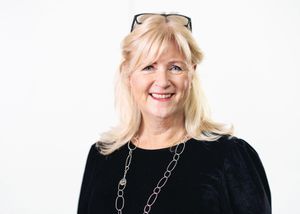
Marianne is the Director of HealthTech Nordic, which is led by Innovation Skåne in cooperation with other Nordic partners. Her background is in chemical engineering and biotechnology. Skåne is a region in southern Sweden. The Medicon Valley cluster comprises Skåne and Zealand in eastern Denmark.
Innovation Skåne is fully owned by Region Skåne, and its goal is to contribute to future public services and regional growth through innovation. Innovation Skäne provides innovation management and support for Region Skåne’s operations. It also runs growth projects supporting entrepreneurs and start-ups in new industries where Skåne has strong capabilities, and where there is international growth potential.
HealthTech Nordic is one of the leading communities of Health Tech companies in the world. The member companies offer a variety of world-class health
tech solutions which empower the individual, patients as well as professionals. It represents a paradigm shift, offering new and better ways to provide and to receive healthcare. The community consists of more than 200 companies, of which almost half are internationally established.
What is the difference between health tech and medical devices?
Medical devices, as we think about them today, work within the traditional healthcare paradigm whereas health tech and the digitisation of healthcare creates a new paradigm by empowering the individual to a whole new level, which is the key difference.
Healthcare is an essential part of our lives, and it is constantly evolving. In recent years, there has been a paradigm shift in healthcare, driven by the advancement of digital health and artificial intelligence. These technologies are making affordable health care more accessible to everyone.
For several years now there have been apps that can track our fitness goals, remind us to take our medication, and even diagnose medical conditions.
In addition, AI is being used in treatments for diseases and to improve the accuracy of diagnoses. The potential of these technologies in the hands of patients and profession is limitless, and they are revolutionising healthcare as we know it.
Where are we on the journey to a mature digital health sector?
The digitisation of the healthcare industry is inevitable. We have seen it happen in other industries, for example, in the music industry, which has been completely revolutionised by Spotify. And please note, technology empowers the individual, it doesn’t exclude the human element of music creation and listening. Healthcare by comparison is at the stage where CDs were introduced. Online doctors and web-enabled visits to the doctor are like CDs – definitely an improvement, but just the beginning of a paradigm
shift.
The paradigm shift is for instance about applying artificial intelligence to multiple data sources in forms assisting the individual patient or profession to better health and care and opening up technology to those who are less tech savvy are part of this paradigm shift. It is also about helping people to better lifestyles and to save lives through remote monitoring and earlier intervention. The lifestyle tools are often based on Cognitive Behavioural Therapy and use gamification designs to actually make people lead healthier lives by exercising more and eating more healthily.
There is of course resistance to change, but digitisation is inevitable and there are many benefits to be had. One of the biggest benefits is that digitisation will make healthcare more accessible and affordable. It will also allow for more personalised care, as data can be more easily collected and analysed. In addition, digitisation will help to improve the quality of care, as well as reducing errors and waste. It is a positive development that will benefit both patients and providers alike.
The change is very challenging, but this is more of a governance issue than a tech one. The definition of success for local governments requires refinement and politicians will have to pose different sorts of questions. Multiple organisations need to be involved but they are not sufficiently joined up. The public healthcare “solution” to increasing demand has traditionally been about “more hands, more beds” but that is not sustainable in the face of an ageing population, chronic diseases, and lifestyle
diseases. The public purse simply cannot afford the traditional solution.
If you had unlimited money but limited space (no more than 1,000 sq m), what would you build?
Healthcare is the responsibility of many different professions so I would start with a novel “clearing house” and development facility for one disease and one age cohort. By that I mean a place where all the relevant decision-makers could gather to tackle the entire range of questions (patients, political, financial, medical, technical and so forth) that are impeding progress on this single situation. After experimentation and fine-tuning, we’d have solved most hurdles at hand today and I would roll out a similar approach to other diseases and cohorts. In parallel I would do everything in my power to attract media to this showroom, making results and methods interesting, and spreading the word.
In terms of driving innovation, how important is cross-discipline cooperation?
In today's increasingly interconnected world, cross-discipline cooperation is essential for driving innovation, that is, new solutions that bring real
value. Politicians, clinicians, patients, industry, scientists, data scientists and other technical experts all have different knowledge and skillsets that can be brought to bear on a problem. By working together, they can develop a more comprehensive understanding of the problem and identify potential solutions that would not be apparent to any one group working in isolation. In addition, cross-discipline cooperation can help to ensure that solutions are implemented effectively and efficiently. By drawing on the expertise of multiple disciplines, it is possible to develop a more holistic approach that considers the multiple factors involved in any
given issue. In short, cross-discipline cooperation is a must if you wish to achieve innovation in today's world.