

On 9 May, Potsdam Science Park became the site of a lively networking event called New Perspectives on Science and Real Estate hosted by Matthew Hopkinson and Stephen Ryan. The purpose of the event was to bring science and real estate closer together by exploring three themes: the importance of life science real estate, the unique real estate needs of scientists, and how these needs are best met by investors and developers.
Topic 1: the importance of life sciences real estate
The first presenter, Agnes von Matuschka, CEO of Potsdam Science Park, introduced attendees to the park by means of a short video and a presentation. Potsdam Science Park has blossomed into Brandenburg’s largest science park, housing institutions such as three Max Planck Institutes, two Fraunhofer Institutes, and the Golm campus of the University of Potsdam.
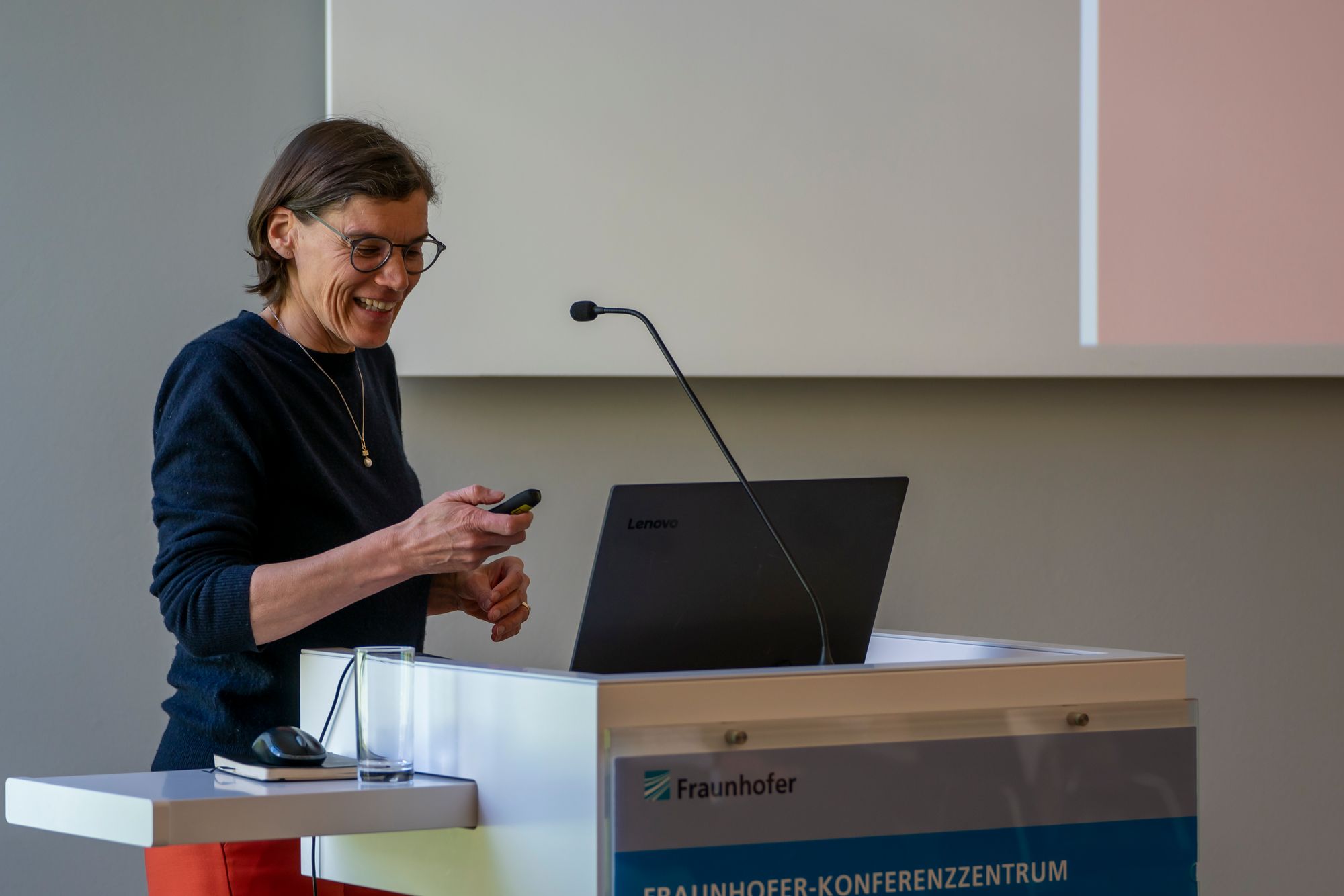
To nurture the growth of its startup community, Potsdam Science Park has two innovation centres, GO:IN and GO:IN 2. The plan is to expand the Park’s lab facilities and build additional amenities by 2040.
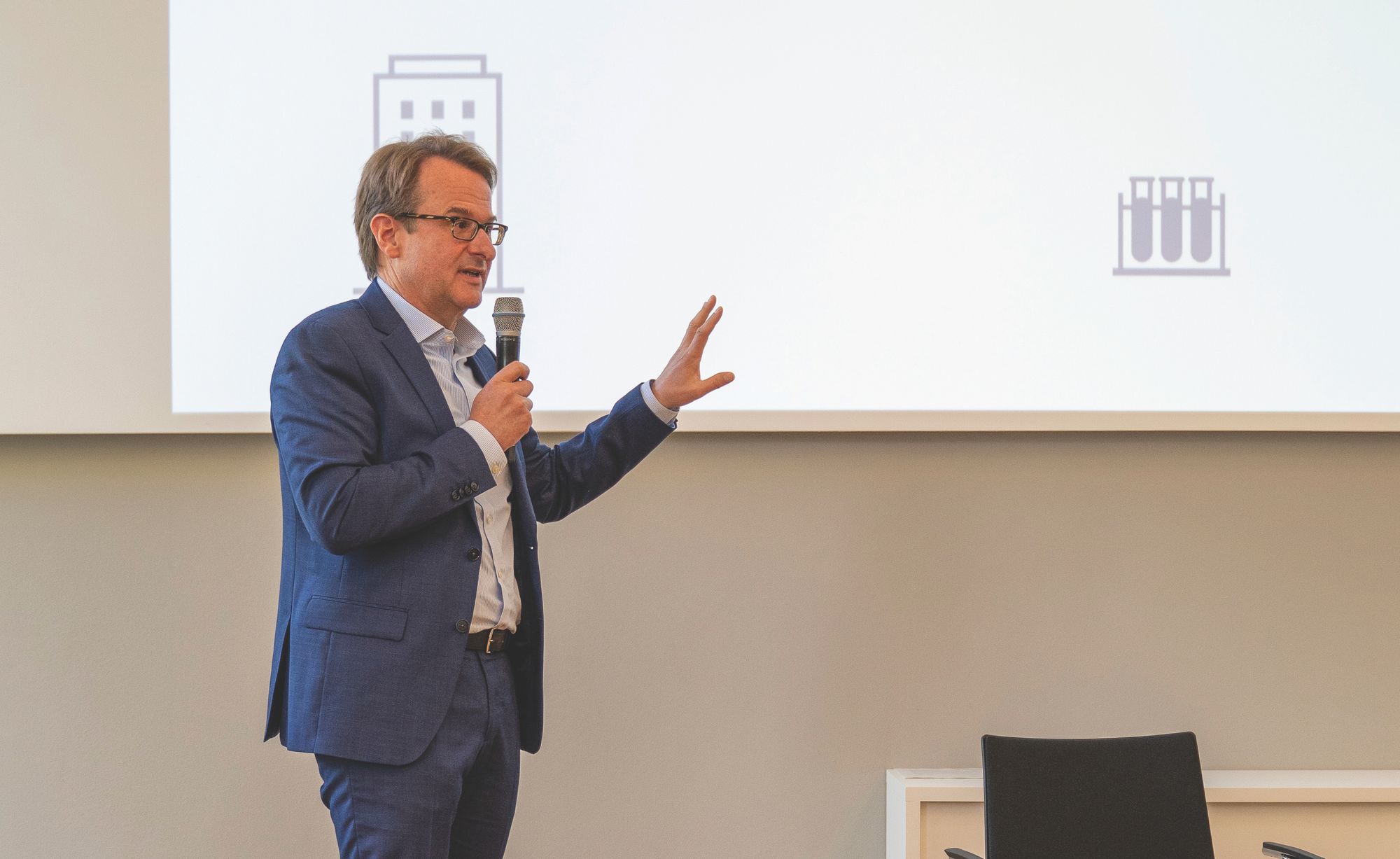
The second presentation was by Bernd Rubelt of the Brandenburg State Capital Potsdam, who outlined the city’s goal of making Potsdam-Golm an international centre for innovation by 2040. Rubelt emphasised the importance of an integrated approach to urban-landscape development, sustainable and climate-smart strategies, and well-designed infrastructure and traffic management to further improve the positive synergy between Potsdam-Golm and its science park campus. A tram stop feasibility study, for example, could be a key step forward in the town’s infrastructure development. The creation of a new Golm town centre could make it more liveable for science park employees and their families.
Life science real estate, therefore, is not only important in driving scientific innovation forward. It can also stimulate regional economies and strengthen ties to the local community.
Topic 2: the voice of the scientist
The centrepiece of the networking event was a panel discussion to examine what scientists want from their lab buildings.
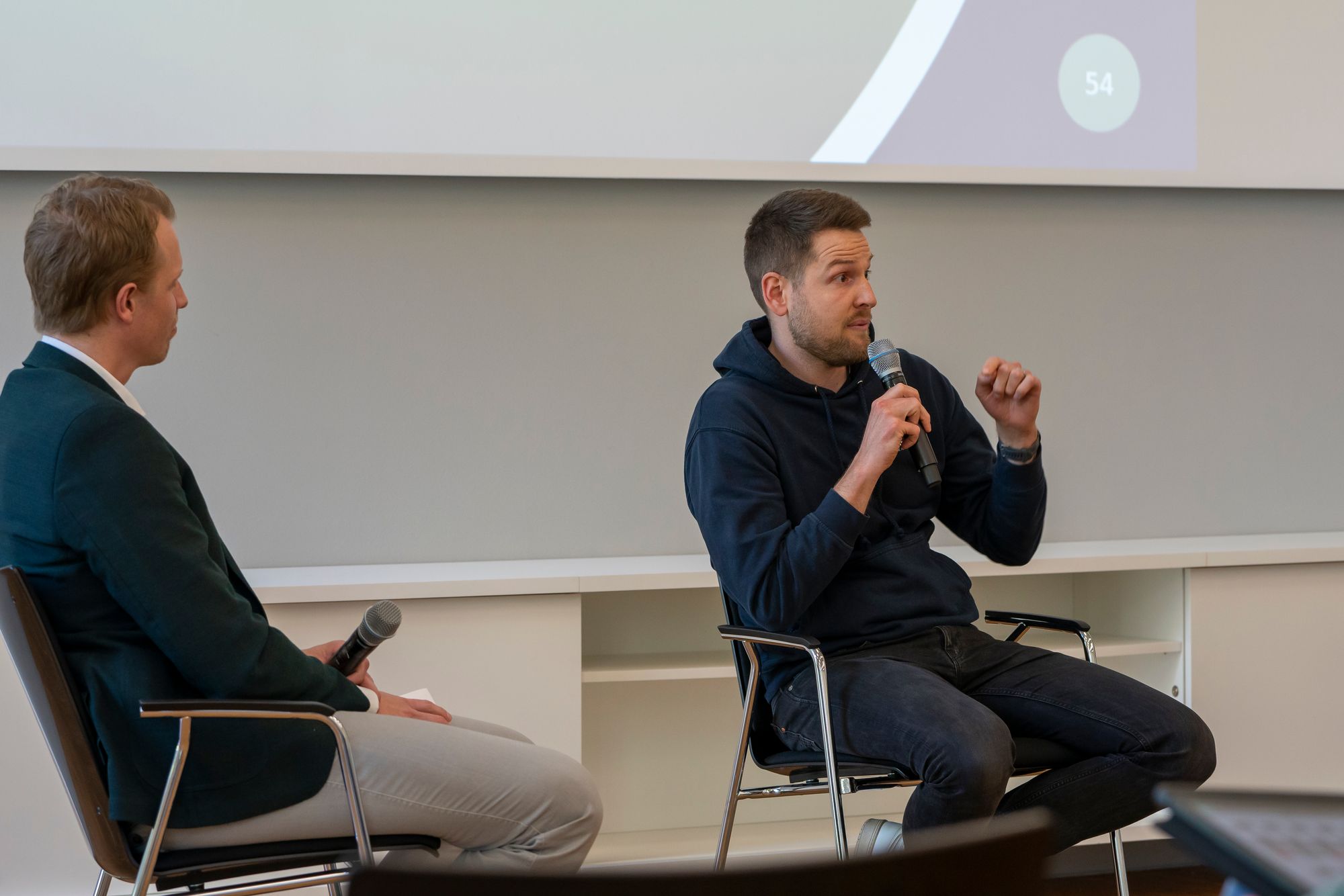
Moderated by Remco van der Mije of GARBE Institutional Capital, the panel featured three experts driven by scientific curiosity: Anton Pluschke, founder of Ordinary Seafoods; Jérôme Lutz, founder of Smart Lab Architects; and Nadine Galandi, a life science and healthcare consultant. The three speakers briefly described their career paths and personal priorities.
- For Nadine Galandi, who completed her PhD at Potsdam University, a naturally inquisitive personality led her to step outside of the lab and move into life science consulting.
- Entrepreneurial curiosity is what drove Jérôme Lutz into the life science space as well. A serial entrepreneur, Lutz and his company Smart Lab Architects now help life science clients find, build and equip labs that meet their needs.
- Anton Pluschke, who holds a PhD in food science, wanted to create delicious plant-based food products that are as close as possible to the original characteristics. The result is the extraordinary enterprise Ordinary Seafoods, which is already producing plant-based salmon, tuna products and shrimp products.
While each panelist came from a distinct background, all three agreed on the value of the collaborative networks or ecosystems of companies within science parks. According to Galandi, by connecting businesses to neighbouring universities, science parks address the need of creative, explorative scientists to exchange ideas freely.
For Pluschke, the human element was a determining factor in moving Ordinary Seafoods to the Potsdam Science Park as well. At other locations, the experience can be more hands-off than at Potsdam.
With Smart Lab Architects, Lutz sees the other side of the coin – that of the lab supplier. Lutz pointed out that biotech startups often need labs that provide the equivalent of big pharma facilities with minimal cost and effort within six months.
Scientists and entrepreneurs come from creative and analytical backgrounds. Placing their ingenuity at the centre of life science real estate development can lead to more collaborative science in the lab.
Topic 3: how investors and developers can deliver the necessary real estate
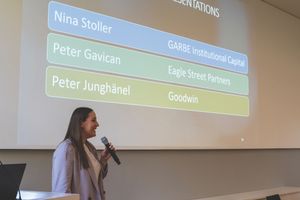
The final part of the conference looked into how investors can help deliver the necessary real estate to meet the needs of life scientists and featured three experts: Nina Stoller, Investment Manager at GARBE Institutional Capital; Peter Gavican, Chief Operating Officer at Eagle Street Partners; and Peter Junghänel, Partner at Goodwin Procter LLP.
Nina Stoller compared life science workplaces and labs to hotels: for her, the key is to treat the scientist like guests at a five-star hotel, providing them with personalised services and a meaningful sense of belonging. Making the workplace enjoyable is the key to attracting the right tenants.
According to Peter Gavican, who has a background in medical devices, life sciences are often seen as “sexy” and exciting investment opportunities. However, there is often considerable naivety about what life science real estate actually entails. It is essential that investors, including venture capital firms, are advised by life science experts in order to have realistic expectations and get the targeted return on their investment.
In the closing presentation, Peter Junghänel, partner at Goodwin Procter LLP the global law firm discussed the legal aspects of the intersection between real estate and life science.
Funding is essential for a life science real estate development to thrive, but it is not the only determinant of success. Before that, a convincing business model helps investors and lawyers to get comfortable with a developer and to implement the plan.
Conclusion
New Perspectives on Science and Real Estate brought together a range of experienced professionals from different fields and disciplines - including life and food scientists, investors, lawyers and city planners.
Each speaker of the afternoon had a unique story to tell, and there was a central message that ran through the conference as a whole: close collaboration between life scientists, real estate professionals, investors and city planners is essential to create the spaces where science lives.
At the end of the day, a robust understanding of the scientists’ real estate demands is the first step to long-term success in life science real estate development.