Poland is the largest pharmaceutical market in Central Europe and the sixth largest in the European Union. Poland’s pharmaceutical sales experienced a 12.9 percent year-on-year increase, reaching $15.6 billion (€14.2 billion / £12.3 billion) in 2021. Sales are forecasted to reach $23.8 billion (€21.7 billion / £18.7 billion) by 2026 and $33.3 billion (€30.3 billion / £26.1 billion) by 2031. There is a strong focus on both generics production and new product development. For the medical devices and equipment sector, revenue in Poland is projected at $3.6 billion for 2023 and total revenue is expected to reach $4.5 billion (€4.1 billion / £3.5 billion) by 2027.
In order to bolster the sector’s competitiveness and consolidate its position in the European market, the Polish government released its Governmental Development Plan for the Biomedical Sector for the years 2022–2031. This comprehensive plan aims to foster innovation, implement reforms, provide financing programs, and create an investor-friendly ecosystem. The Medical Research Agency (MRA) is at the forefront of implementing this programme, offering substantial grants for research on domestic production of generic and biosimilar medicines.
Krakow
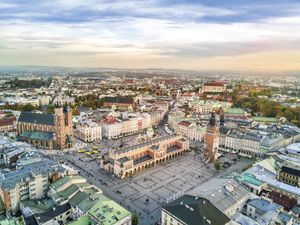
Krakow, the second largest city in Poland, has emerged as a key location, offering a competitive advantage with its world-class educational institutions and research facilities. Located in southern Poland and lying on both sides of the upper Vistula River, Krakow has a population of 782,000 residents and an influx of 150,000 students annually. There is a population of approximately eight million people within a 100-km radius of the city. As the administrative hub of the Malopolska Voivodeship (province) in south-eastern Poland, Krakow benefits from good transportation links, including an international airport and efficient train connections to Warsaw and Gdansk. The city is also home to over 20 higher education institutions, including the Jagiellonian University, which is ranked 293rd in this year’s QS World University Ranking.
Krakow attracts international investors
Krakow’s appeal to international investors in the life sciences sector lies in its competitive educational institutions, well-equipped research and development facilities, availability of quality properties suitable for modern industry requirements, and a highly skilled workforce. The city houses a range of entities engaged in life sciences, including pharmaceutical companies involved in development, production, and distribution, as well as biotech, R&D, and quality control entities specialising in pharmaceuticals and biotech products.
LifeScience Cluster Krakow
Established in 2006, the LifeScience Cluster Krakow is a collaborative network of institutions and companies in the southern region of Poland. The cluster aims to foster cooperation across key stakeholders in the life sciences sector, facilitating commercialization of research and development efforts. The cluster’s activities revolve around two primary value chains: products and technologies for health and quality of life, and products and technologies for sustainable development and the bioeconomy. Comprising six interest groups spanning different areas of activity, the cluster aligns the efforts of innovative enterprises, auxiliary service providers, medical service providers, research organizations, academic institutions, and local and regional authorities.
Science Park in Krakow
There are paved and landscaped spaces between the three buildings, two of which are linked by suspended walkways.
One notable initiative in Krakow is the Life Science Park, a three-building complex encompassing 20,000 sq m (215,280 sq ft) of space. Owned and managed by the Jagiellonian Center of Innovation, the park is designed to foster collaboration between businesses and researchers in the field of life sciences. With dedicated laboratory and office spaces, the park offers flexible options for biotechnology, biomedicine, biology, chemistry, pharmacology, physics, nanotechnology, and environmental protection activities. Additional amenities include meeting rooms, conference facilities, a kindergarten, an electronic library, and a gym.
Building “A” with a total space of 5,890 sq m (63,460 sq ft) is intended for commercial lease to life science companies. The laboratory space can be adapted to suit individual customers’ needs. Building “C” complements the services offered in building “A”. The laboratory space available there is 6,300 sq m (67,800 sq ft). Building “B” houses the “Incubator” programme and is intended for lease to research projects and small-sized life science firms. Unlike the other buildings in the park, it has laboratories and offices ready for use. Laboratory space is subdivided into 50-meter modules. The areas are furnished with basic laboratory equipment. The total area of the Incubator is ca. 6,800 sq m (73,200 sq ft), and the laboratories account for 1,770 sq m (19,100 sq ft) of that total floor space. The Life Science Park is located about eight km (five miles) southwest of the city centre and can be reached in 35 to 45 minutes by train.
Life sciences companies in Krakow
Several major life sciences companies have established their presence in Krakow, leveraging the city’s resources and opportunities. AstraZeneca opened a location in Krakow in 2022 in the vicinity of the AGH University of Science and Technology. As part of the company’s development, close cooperation with Sano (a non-profit research institute dedicated to the advancement of computational medicine) is planned.
Selvita, one of the largest preclinical Contract Research Organizations (CRO) in Europe, recently completed the construction of its new headquarters in Krakow, which includes state-of-the-art laboratories for drug discovery activities.
Other companies with a presence in Krakow are:
- Ardigen
- Consanance
- Ergomed
- Fresenius Kabi
- IBSS Biomed
- Intelliseq
- Real Research
- Ryvu Therapeutics
- Teva/Pliva
Krakow’s property market
Krakow currently offers 1.7 million sq m (18.3 million sq ft) of office space, with a sizeable portion occupied by business process outsourcing companies (BPO). Additionally, the tech sector has a strong presence, further driving demand for office space. Construction of an additional 125,000 sq m (1.3 million sq ft) of office space is currently underway, reflecting the city’s expanding potential as a leading European life sciences hub.
Conclusion
With its favourable location, respected educational institutions and collaborative networks, Krakow has the potential to be an important European hub for life sciences.