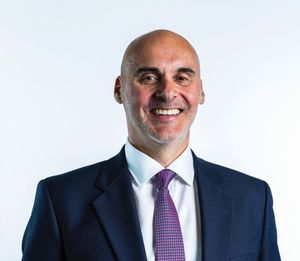
We recently caught up with Simon Farnsworth, Managing Director of Ironstone Asset Management, who are the investment and asset manager of Life Science REIT.
What is the background to the establishment of Life Science REIT?
We had witnessed the growth of the life sciences real estate market
in the US and, in particular, the exceptional performance of Alexandria REIT, which invests wholly in life science ecosystems and clusters. With the sector’s higher profile in the UK post-Covid and investor interest growing, we recognised that there was no simple route for investors to access the UK life sciences real estate market.
It was determined that Life Science REIT would be listed on the AIM market of the London Stock Exchange because it allowed the fund to move quickly. Our challenge was to triangulate the sourcing of a seed portfolio, a management team and raising investment capital. With the backing of supportive investors and banks, Life Science REIT launched on AIM on 19th
November 2021, with a target raise in excess of at least £150 million. In fact, the fund was oversubscribed and had to cap the raise at £350 million.
Tell me a little about the assets in the portfolio.
We have grown the team from two to twelve people across Finance, Asset Management, Legal and ESG. To help us bridge that gap between science and real estate, a key member of our team is Tahrima Rahim (ex-Genomics England) who brings a wealth of knowledge around the business of science and the range of specific occupier needs. This is extremely useful when undertaking due diligence on potential occupiers.
The geographic focus of the portfolio is on the Golden Triangle. Would you look at regional markets?
At the moment we are pausing for breath to take stock of delivering on the existing portfolio. We are strong believers in what we have christened “genius loci”, the triangulation of the universities, the hospitals, and the capital. This exists within the historic fabric of Oxford and Cambridge
and combines with extremely tight supply. We also like the area around the King’s Cross/St Pancras Knowledge Quarter, where the Francis Crick Institute, the Alan Turing Institute and Deep Mind are a huge talent draw.
How do you define a Life Science property?
The fund has a broad range of occupiers utilising space for production, pure offices, wet labs, dry labs, and hybrid space. But if we look at Oxford Technology Park, which we forward funded, there is c. 200,000 sq ft (18,580
sq m) of hybrid tech box accommodation. These are c. 14 ft (4.2 m) slab to slab (ceiling height) units over two floors with a steel frame and concrete floors. They are equipped with appropriate M&E and power upgrades, big
risers, and loading bays can be installed if required by the tenant.
These units can be 100 per cent offices, 100 per cent production, 100 per cent wet labs or anything in between.
They are designed to be as flexible as possible with planning consent for a range of uses. We can accommodate requirements from 6,000 sq ft (557 sq m) to 50,000 sq ft (4,645 sq m). Initial rents on the park were in the range £15 to £16 per sq ft pa (€15.6 to €16.4 psm/mth), but we are now achieving £20 per sq ft pa (€20.8 psm/mth). Office rents are at £28 per sq ft pa (€29.3 psm/mth). This Park will be developed out to 450,000 sq ft (41,810 sq
m) over the course of the next 12 to 18 months, with strong tenant interest already evident. We expect that the Park will be fully let or pre-let prior to completion in late 2023 / early 2024.
How important is the adaptability of the building?
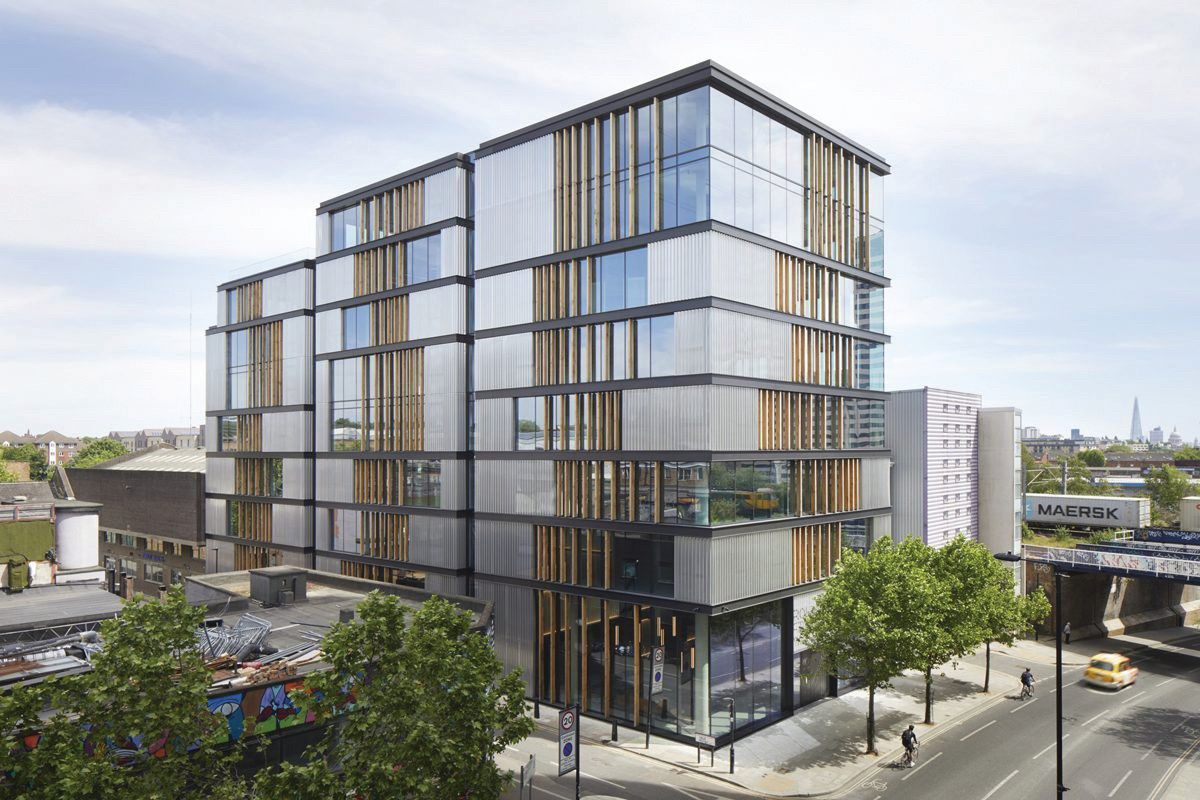
Choosing the right buildings is critical to satisfying the tenant and adding value. Before advising the fund to purchase assets, we will undertake a full viability study with specialist consultants. Let’s consider a couple of examples: Rolling Stock Yard was developed as an office building. Not every office building works as a life science building, but this has good floor to ceiling heights, good power supply and decent access for loading and, with Moorfields Eye Hospital moving close by, it’s in a great location within the
King’s Cross KQ – it benefits from what I call “intellectual proximity”.
We are currently fitting out two floors for labs which will let at £100+ per sq ft pa (€103.9+ psm/mth).
Cambourne Business Park was in fragmented ownership and unloved. But they are great buildings with good floor to ceiling heights, parking, and plenty of power. The strategy is to undertake a full re-brand, to launch in 2023, and convert a 1990s business park into a modern life science campus, which will involve the introduction of lab space. Key to this is improving the amenity provision by bringing in an operator for a “hub” type facility that will host collaborative space - a café, open plan co-working, and bookable rooms, similar to the Bradfield Centre at Cambridge Science Park. This is
probably our longest-term project, over three to five years, decanting
office occupiers and bringing in a range of science, agritech and tech occupiers.
How important is ESG in your strategy?
ESG is incredibly important to our strategy. We have a dedicated director in Pippa Stacey. What goes on outside of the buildings is as important as what goes on inside. New builds, for example Oxford, will be developed to
BREEAM Excellent and we are adding photo-voltaic cells during the upgrades to Cambourne. On the “S” side we are bringing in local suppliers and operators to the Parks to build the important local community spirit.
How does life sciences real estate compare to more traditional forms of commercial real estate?
It’s just much more varied. You have to be so much more aware of what your occupier wants. With offices, you can deliver a fairly generic product to the market, but for life sciences you have to be right on top of tenant
requirements, from offices to wet and dry labs, production space,potentially all under one roof. I’d also add that, generally, tenants tend to be “stickier” given the capital costs and equipment involved. The science doesn’t stop when the lease expires!
Does this make the sector higher risk?
I think that the breadth and variety of tenants actually make it lower risk. If you buy the right assets, you can capture a wider range of occupiers across different segments of the life sciences spectrum.
Given current market uncertainty, what about liquidity?
It’s strong – there’s a real breadth of buyers out there, ranging from UK institutions like Royal London, Canadian Pension Funds (Oxford Properties, PSP Investments), private equity (Brockton Everlast), Sovereign Wealth Funds like GIC, recent US entrants such as Breakthrough Properties, and owner occupiers. To an extent this is a challenge for us, but we consider that the fund has acquired a portfolio of strong assets through our relationships
and knowledge of the market – and that will be our route going forward.
Again, given recent uncertainty, are there any valuation issues at present?
I think valuers are avoiding a knee-jerk reaction and there is a lack of comparable evidence. But I do think that, inevitably, there will be a slight downturn in values across the real estate market, with some sectors hit harder than others. What I will say is that within the life sciences sector, ERV growth is still really strong. So, to an extent this offsets any modest
yield shift. And this is a resilient occupier base, not really exposed
to the more vulnerable consumer economy. Venture capital and other funding for life science companies in the UK remains strong.
Are there any challenges specific to life sciences buildings?
While not specific to life sciences, cost inflation is an issue and
ensuring that budgeting is realistic; lead-in times for equipment is another industry-wide problem. You just have to make sure that your consultants
and advisors are on their toes and are thinking much further ahead - that’s our biggest challenge right now.
What about the future for Life Science REIT?
Immediate plans are to complete the full market listing prior to Christmas, but this will not involve any capital raising. We’d love to raise some more money for the fund when the share price allows it. Moving to the main
market is a step towards accessing broader and deeper sources of capital. But in the current climate we’re catching our breath. It’s key for us, and the fund, to now deliver on promises made at the IPO.
Phase 1, the acquisition of assets has been completed. Now, the fund needs to allocate capital to those projects, and we are looking to demonstrate that we can bring in new life science focused occupiers, supply much needed lab space, drive rents forward, and help the fund to deliver the promised
shareholder returns – essentially adding value. In time, we will look at recommending a mix of assets to the fund for repositioning alongside income producing stock.
Over €200 billion has flowed into European life sciences start-ups and scale-ups over the past decade. This funding is powering innovation and reshaping the sector's real estate.