

Introducing Edinburgh BioQuarter
Edinburgh BioQuarter is located on a 67.6ha (167 acre) site in the area of Little France, 7.9 kilometres (4.9 miles) south-east of the city centre, on the principal A7 arterial route. Travel time from the city is approximately 20 minutes by car, taxi or public transport.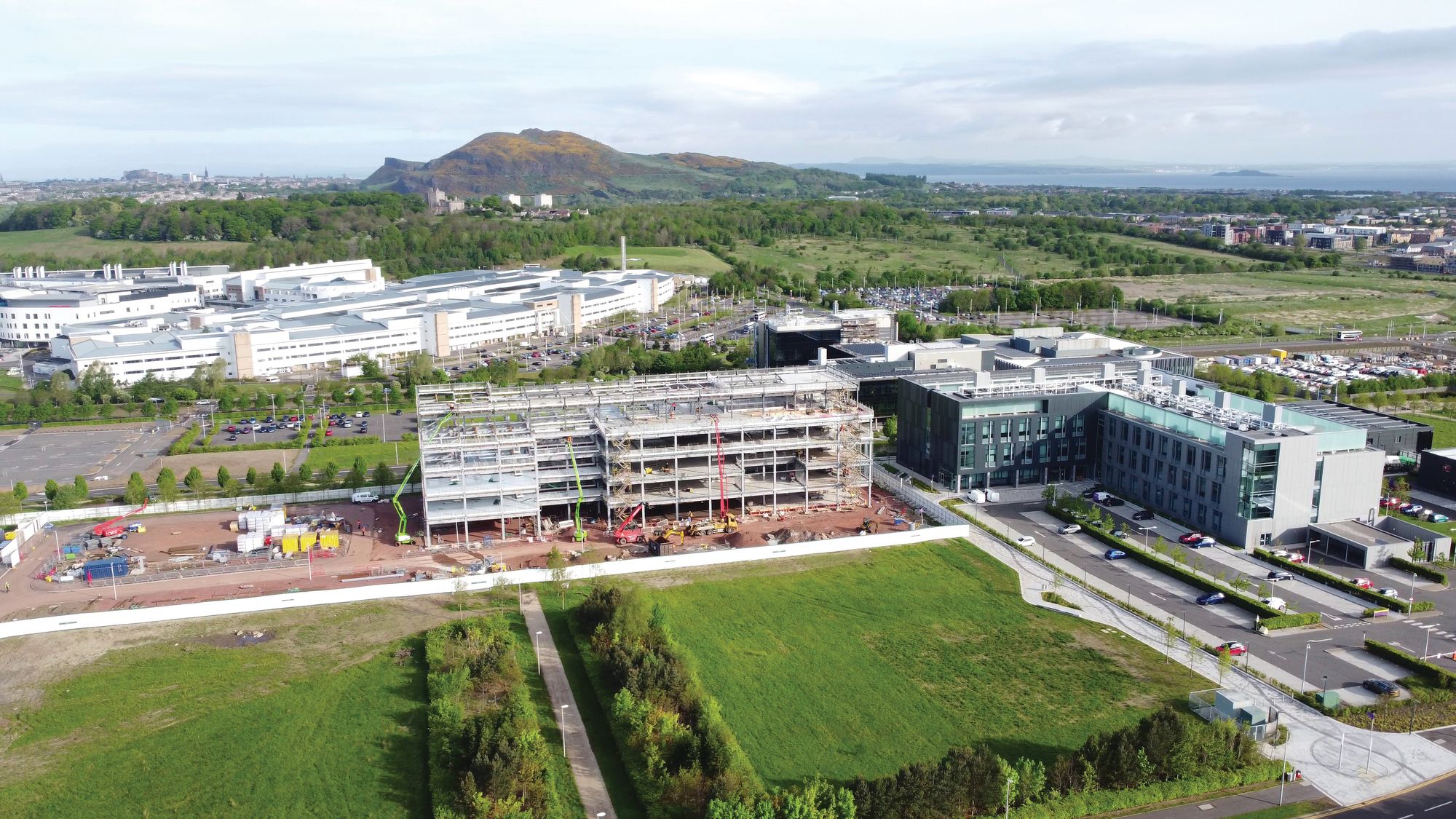
Key occupiers at BioQuarter
Key occupiers include:
- Royal Infirmary of Edinburgh
- Royal Hospital for Children and Young People (RHCYP)
- Department of Clinical Neurosciences (DCN) located within RHCYP
- Child and Adolescent Mental Health Service (CAMHS) – located within RHCYP
- The Queen’s Medical Research Institute
- The Cell and Gene Therapy Catapult
- LifeArc
- Concept Life Sciences
- RoslinCT
Commercial space
BioCube 1 comprises 1,115 sq m (12,000 sq ft) of premium quality laboratory and office accommodation over two floors. It provides multiple flexible Cat 2 labs and Grade A office suites, with amenities including showers, changing rooms, meeting rooms,and kitchenette area. The building is occupied by the Advanced Care Research Centre on the ground floor and Fios Genomics Ltd. on the first floor. BioCube 2 is a 1,600 sq m (17,221 sq ft) state-of-the-art cell and gene therapy manufacturing facility and training laboratory, occupied by RoslinCT since October 2021. NINE, Edinburgh BioQuarter is a fully let multi-tenanted building. The ground floor (1,242 sq m / 13,365 sq ft) provides incubator space incorporating fully fitted “walk-in” labs and Grade A offices. The labs are fitted to Cat 2 standard. Larger units have integrated write-up areas / tissue culture facilities. Shared glass wash-up and autoclave facilities are offered. The upper two floors provide 2,468 sq m (26,564 sq ft) of accommodation. Second floor tenants include Edinburgh University, Health Data Research UK and the Usher Institute, all with a focus on data-driven innovation. The NHS and a range of commercial tenants are located on the first floor. NINE provides a wide range of services and amenities including a 60-seat café, 156 parking spaces, cycle racks and facilities for the storage and disposal of chemicals, gases and waste. “We are fully occupied – there is no space. Demand is far outstripping supply, hence the reason to fast-track and accelerate at scale and at pace the development of the Health Innovation District,” says David Ridd, Communications, Business Development and Marketing Manager, Edinburgh BioQuarter.Development pipeline
Institute for Regeneration and Repair (IRR)
The IRR building is approximately 1,670 sq m (18,000 sq ft). Completion is due this summer, with phased occupation from Q1 2023. Together with the adjacent Centre for Regenerative Medicine, it will provide state-of-the-art laboratory and research facilities and promote collaboration between 600 clinicians and scientists from the Institute. The researchers investigate new therapies and treatments for tissue damage in debilitating diseases such as Parkinson’s disease, multiple sclerosis and cancer, as well as heart, liver and lung conditions.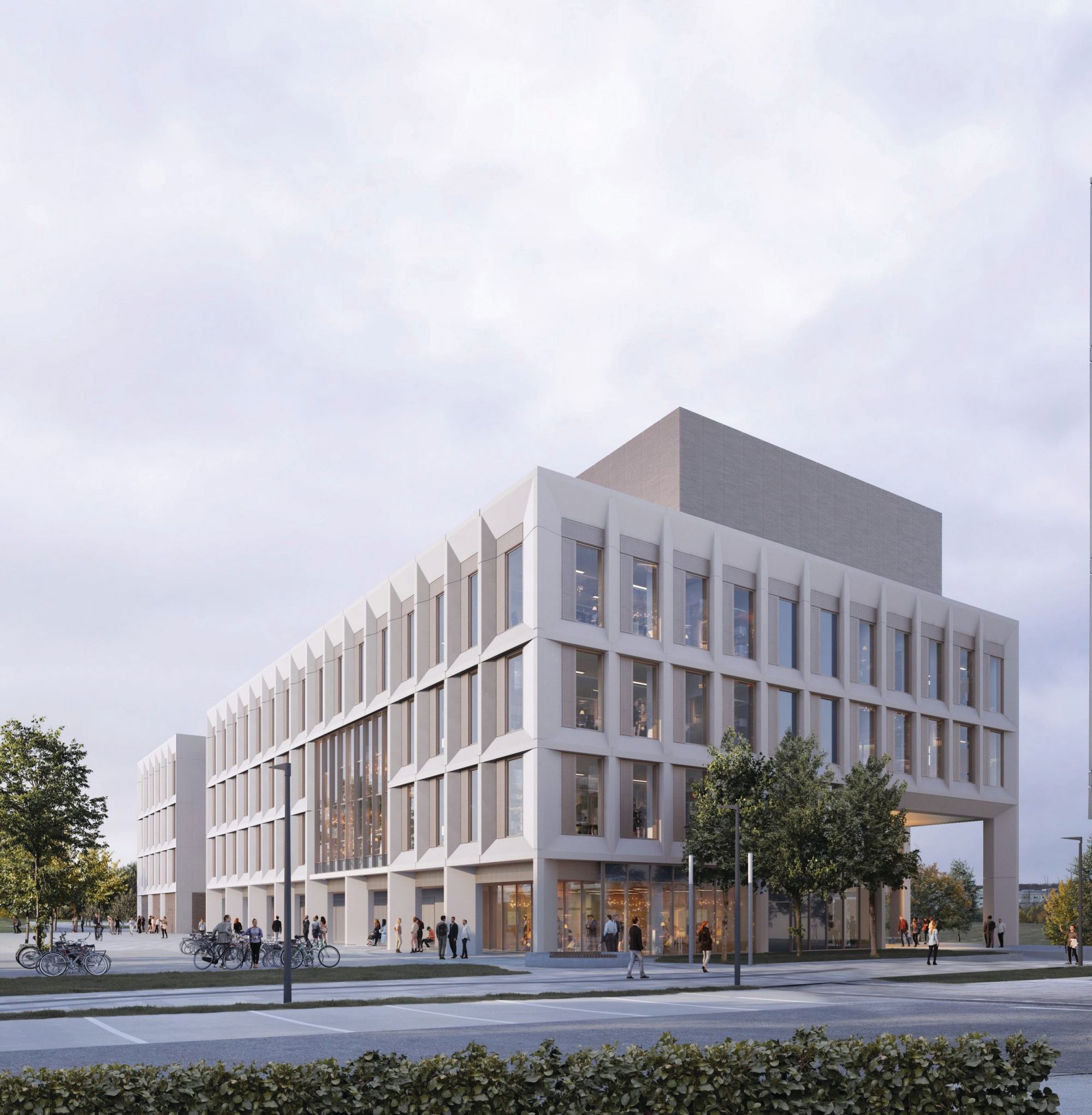
Usher Institute for Population Health Sciences
This 10,395 sq m (111,900 sq ft) gross internal area project over four storeys will deliver new facilities for over 900 Usher staff and commercial partners. The €81 million (£68 million) development secured €58 million (£49 million) of funding from the City Region Deal, with the balance funded by the University of Edinburgh. Completion is expected in 2023, with occupancy from 2024. A key role of this building will be to co-locate Usher staff with commercial partners to foster collaboration and informal interactions.Health Innovation District
In November 2021, Edinburgh BioQuarter formally launched the public procurement process for a private sector partner. The objective is to accelerate the vision for a €1.19 billion (£1 billion) 10-year transformation project to create Edinburgh’s Health Innovation District, a new vibrant mixed-use neighbourhood and a global destination for companies operating within the health and life sciences sectors. “BioQuarter will deliver significant social, cultural and economic benefits to Edinburgh, Scotland and the UK, and life-enhancing health advances to the world,” according to their website www.edinburghbioquarter.com. “We want to create an innovation environment where people want to come and work, live, learn and discover,” says David Ridd, Communications, Business Development and Marketing Manager, Edinburgh BioQuarter. A primary goal is to embed the new Health Innovation District in the local community, to create the jobs, opportunities and connectivity that provide genuine positive social and economic impact, locally and citywide. The fundamental strategy is to bring together the strengths of all anchor institutions and partners. Growth will be carefully curated to match the strengths of the District by monitoring innovation capacity and critical mass. The site currently hosts about 8,000 employees, with a further 4,000 employees expected over the next 10 to 15 years, plus 1,600 construction jobs.