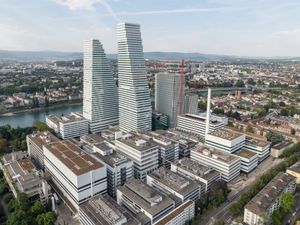

France stands as a prominent player in the life sciences and healthcare sector within Europe. It holds a significant position in the global pharmaceutical market, ranking fifth in terms of market value. France’s public and private healthcare spending accounts for 11.2 per cent of GDP, the highest among European Union countries, surpassing the Netherlands (9.9 per cent) and the UK (9.8 per cent). In terms of employment, France ranks second in the pharmaceutical sector (after Germany) and fourth in the medtech sector, following Germany, Italy, and the UK.
Investments in France thrive on strong collaborations between the private and public sectors, exemplified by the competitiveness clusters. These clusters, known as “pôles de compétitivité”, facilitate collaborative R&D projects by bringing together companies, public research labs, and academia. Their goal is to foster the development of innovative products, processes, and services. The competitiveness clusters were established in France in 2004 and function as membership organizations that unite SMEs, large companies, and research and higher education institutions around specific topics within specific French regions.
France boasts six health competitiveness clusters, which are: Atlanpole Biotherapies, Cancer-Bio-Santé, Eurobiomed, Lyonbiopole, Medicen Paris Region, and Nutrition-Health- Longevity. The Healthcare Innovation 2030 plan, a €7.5 billion (£6.5 billion) project sponsored by the French government, aims to position France as a global leader in healthcare research by 2030. The plan encompasses initiatives such as the creation of biotech clusters and optimisation of clinical trial organisation, among other strategic endeavours.
In this article, we're particularly interested in two key hubs of the French life sciences industry: Paris and Lyon.
Life sciences real estate in the Paris region
With 12.2 million inhabitants, 1.1 million businesses and some of the best universities in the world, the Paris region accounts for 5.4 per cent of EU GDP, making it one of Europe’s main economic zones. Moreover, the Paris region hosts around 700,000 students, including 120,000 international students. Four of the region’s universities (Paris Saclay University, Paris Sciences et Lettres, Sorbonne University and Paris University) are ranked in the Top 100 best universities in the world.
The state of the life sciences industry in Paris
Life sciences companies headquartered in Paris raised over €940 million (£800 million) in venture capital funding in 2021. To provide some context, Sanofi estimates that the Paris region has more than 1,000 life sciences companies, about 300 pharmaceutical companies, more than 200 biotech companies, and over 350 medtech companies. The region is home to 45 hospitals and more than 70,000 healthcare professionals.
In Paris, pharmaceutical companies strongly favour the western suburbs of Paris when it comes to choosing a location. The three pharma clusters of La Défense, Rueil Malmaison and Boulogne Billancourt are in this area.
However, locations for laboratories in Paris tend to be different. Laboratories normally have a lower occupational density than in the traditional offices sector (around 19 sq m / 204 sq ft per employee, well above the office average of 11 sq m / 118 sq ft per employee) as a result of the specific space requirements for life science premises. As a result, laboratory space has traditionally been located in the more affordable out-of-town suburbs, although there are cases of laboratories located within Paris, outside the centre.
Rents in Gentilly, a southern suburb of Paris located just outside the Ring Road and the location of Sanofi R&D centre and French HQs, are around 55-65 per cent of La Défense and 30-35 per cent of the Central Business District. This area is particularly interesting because of its proximity to Le Kremlin-Bicêtre and Villejuif, where four hospitals are located. Its attractiveness is confirmed by leasing activity. For example, Medtronic has leased 5,000 sq m (53,800 sq ft) just west of Gentilly.
Life sciences and healthcare in the Paris region is very heterogeneous. Most premises are located in the Paris region “biotech valley,” which extends from the city to the south of the Paris region, including Agoranov, Genopole, Paris Biopark, Paris Biotech and Villejuif Biopark. The cluster focuses on five strategic sectors: biological diagnostics, diagnostic and interventional imaging, regenerative medicine and biomaterials, digital health and translational medicine.
Key life sciences locations in Paris
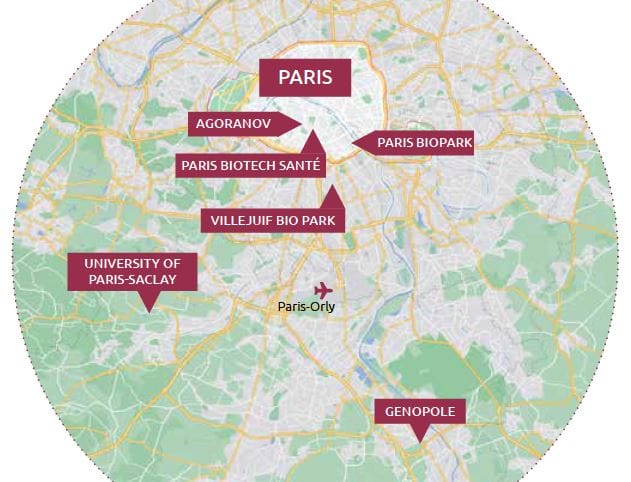
Paris is a polycentric cluster and six of the key locations within the cluster are described below. Note that the first three are within the city itself while the other three are outside the Ring Road which marks the city limits but within the Paris region.
Inside Paris city limits: Agoranov, Paris Biopark and Paris Biotech Santé
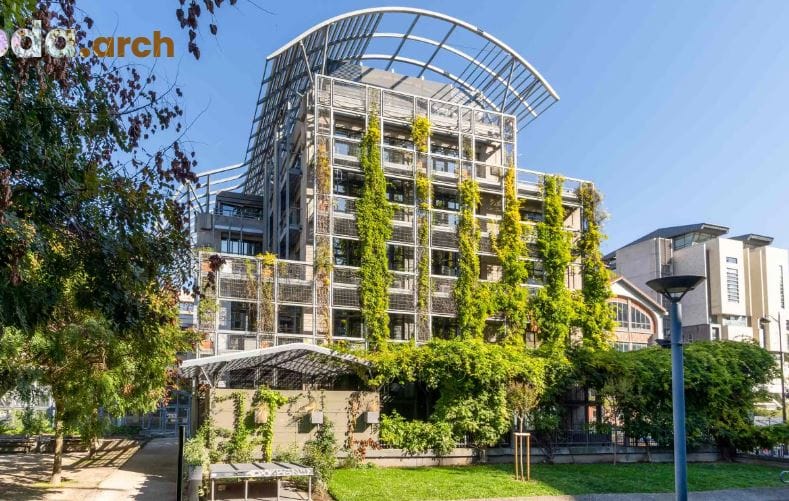
- Agoranov is a science and tech incubator offering 2,300 sq m (24,750 sq ft) of offices, wet labs, dry labs and meeting rooms. Founded in 2020, Agoranov is located at Boulevard Raspail in the south of the city (6th
arrondissement). - Paris Biopark is located in the south-east of Paris and offers around 18,000 sq m of laboratories to biotech companies (13th arrondissement).
- Paris Biotech Santé, created in 2000 by the Paris Descartes University, INSERM, Ecole Centrale Paris and ESSEC Business School, is an incubator specialising in the development of new drug and medical devices and services. The premises are located in the south of the city (14th arrondissement).
Outside Paris city limits: Genopole, Villejuif Biopark and Paris-Saclay
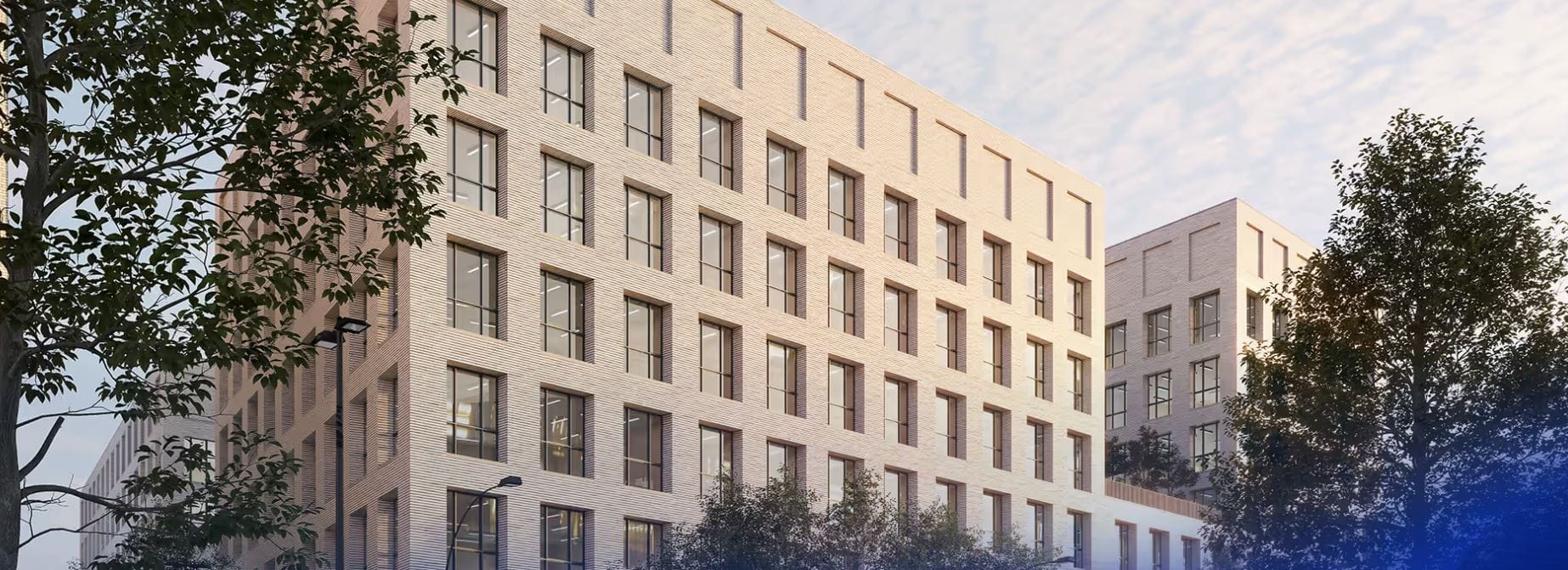
- Genopole life sciences cluster is France’s oldest and largest biotech and biotherapy cluster, established in 1998. It is located south of Orly airport and is close to three colleges along the University of Evry-Val d’Essonne and the South Ile-de-France Medical Centre. This large cluster covers 2,800 ha (6,919 acres) and caters for a broad spectrum of tenants. A further 5.5 ha (13.6 acres) is available for future development. Genopole’s current industry focus is in the areas of biopharmaceuticals, biotherapies, synthetic biology, genetics, genomics, and DNA therapy.
- Villejuif Biopark is a building offering around 5,500 sq m (59,180 sq ft) to biotech/health companies. It is located in Villejuif, just south of Gentilly, and benefits from the closeness to the Paul-Brousse hospital, the Institute Gustave-Roussy and the CNRS-INSERM campus. Linkcity and Brownfields aim to create a large European cluster specialised in oncology (Campus Grand Parc), in partnership with the already-existing Gustave Roussy hospital. This project will include, among other things, around 7,000 sq m (75,320 sq ft) of research laboratories and medical premises, along with residential and hotel space. The scheme will be located next to the future Villejuif-Institut Gustave-Roussy metro station. The expected delivery is scheduled before the end of 2023.
- One further location is worthy of particular attention. Paris-Saclay University, described as a “research mega-campus,”is located in the south-west of the Paris region and is one of Europe’s biggest research universities. The location offers a science park, which accounts for around 15 percent of national research, and a university campus hosting more than 300 labs and advanced research instruments, such as the SOLEIL synchrotron.
About 100 companies and six of France’s public research organisations, including the national research agency CNRS, have a presence there. About 30,000 people work or study at Saclay. The cluster is currently undergoing a 900,000 sq m (9,684,000 sq ft) redevelopment. Savills reports that on average 100-150 start-ups are created on the campus each year with circa 40 per cent of these being in the life sciences sector. In addition to Paris-Saclay University, the area south-west of Paris also hosts the Institute Polytechnique de Paris. It consists of five engineering schools: Télécom Paris, Télécom SudParis, ENSTA Paris, ENSAE ParisTech, and École Polytechnique.
The last of these is one of the most prestigious and selective grandes écoles in France, ranked no.87 in the world (jointly with the Sorbonne and the University of Science and Technology of China). The new metro line 18 will create a direct connection from Paris Orly airport to the Paris-Saclay technology and science cluster by 2027.
Life sciences real estate in Lyon
Located at the confluence of the rivers Rhône and Saône, Lyon is the third most populous city in France, following Paris and Marseille; it is also the regional capital of Auvergne-Rhône-Alpes. With a population of 534,000 in the city itself, 1.3 million in the Lyon metropolitan area, and over 2.3 million in its urban area, Lyon claims the status of the largest city within the region. If the Auvergne- Rhône Alpes region were considered a separate country, it would rank 15th in the European Union.
The state of the life sciences industry in Lyon
Lyon serves as the headquarters for several major life sciences companies, including the healthcare giant Sanofi Pasteur, as well as BioMérieux, Merial, and Genzyme. The healthcare and biotech/pharma/medtech sectors employ approximately 80,000 individuals. More than 2,000 life sciences-related companies can be found in the Lyon region, where around 1,600 clinical trials are conducted annually.
Lyon also hosts the Hospices Civil de Lyon (HCL), the second most prominent teaching hospital hub in the country, and the University of Lyon, a leading research institution.
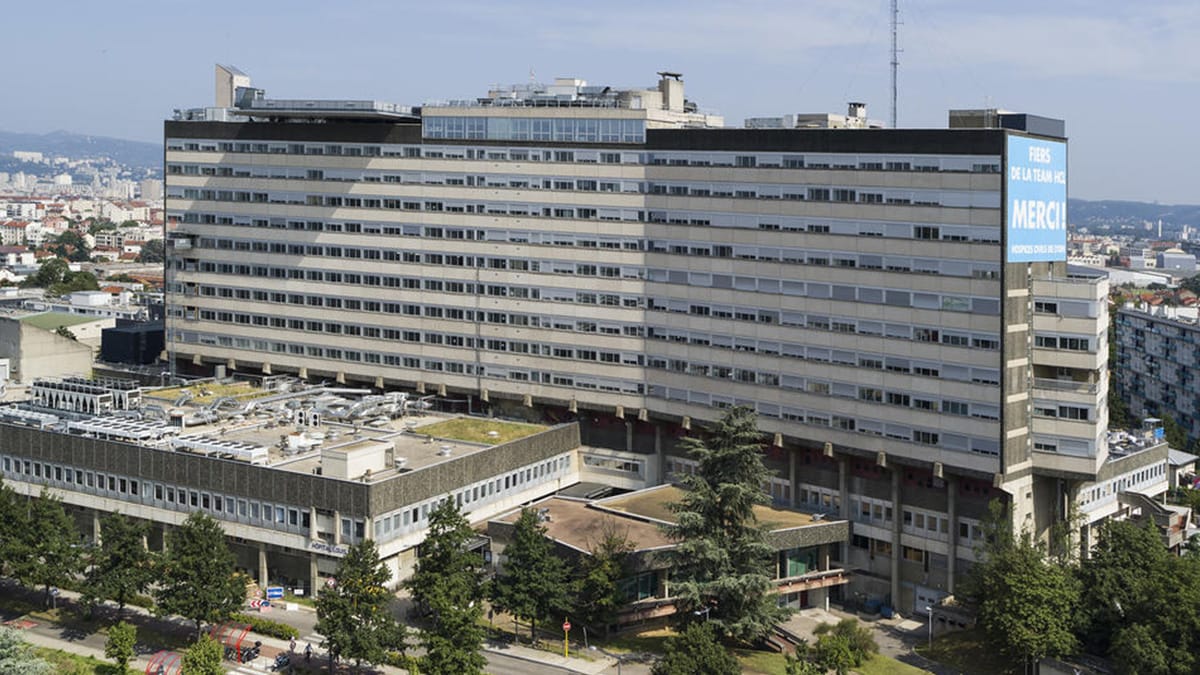
Moreover, Lyon houses France’s only BSL4 (Biosafety Level 4) laboratory, crucial for combating the most virulent infectious diseases. Additionally, the Lyon Metropolitan Area hosts the International Agency for Research on Cancer (IARC), a unique institution established by the World Health Organization to direct and coordinate cancer research. It is housed in the Nouveau Centre.
The building cost €60 million (£51.7 million). The Métropole, owner of the infrastructure, injected €19 million (£16.4 million) and made the premises available free of charge for thirty years. The City of Lyon gave the land free of charge, estimated at €13 million (£11.2 million). The State contributed €17 million (£14.6 million), and the Auvergne-Rhône-Alpes Region €14 million (£12 million). The building is located in a district where many health players and companies are already present (including Sanofi Vaccin, Boehringer, and Genoway).
WHO World Academy
In 2024, the district will also host the WHO World Academy, a nine-storey learning facility currently under construction near the Stade de Gerland metro station, the joint headquarters of the National Agency for Food, Environmental and Occupational Health and Safety (ANSES) and the National Agency for the Safety of Medicines and Health Products (ANSM). The Lyon region hosts several companies specialising in various fields, including immunology and infectiology (mainly vaccines), oncology, neurosciences, cosmetic dermatology (primarily tissue engineering), medical technologies (especially orthopaedics), and veterinary public health.
Lyonbiopole
Lyonbiopole serves as the health competitiveness cluster of the Auvergne-Rhône Alpes region. It brings together over 275 members, including companies, academics, and hospitals, with the aim of promoting innovation, growth, international expansion, and the development of new projects. Lyonbiopole focuses on the biotech, medtech, and digital health-tech domains. Acting as a public/private interface, the cluster implements actions to foster R&D collaborations, facilitate project establishment, and enhance strategic and financial partnerships for economic and international development. The cluster has also established shared technological platforms, such as the Lyonbiopôle Infectiology Center opened in 2009.
Key life sciences locations in Lyon
While healthcare research and life sciences facilities are dispersed throughout the entire region, two particular areas stand out:
1. Lyon-Gerland Biodistrict
Located to the south, this district brings together major companies such as Sanofi Pasteur, Merial, and Genzyme, alongside smaller SMEs including Aguettant, Episkin, Genoway, and Imaxio. These companies have been establishing their presence in the area since 2005, focusing on research related to human and animal infectious diseases and cancers. The Lyon-Gerland Biodistrict employs around 5,000 individuals, with an additional 2,800 teacher-researchers present in the area. The district boasts state-of-the-art infrastructure, including the P4 Jean Mérieux laboratory (planning to double its capacity), the Infectiology Center with P2 and P3 laboratories spanning 2,000 sq m (21,500 sq ft) the Lyon Functional Genomics Institute (opened in 2012), and the Accinov innovation platform (opened in 2013).
Gerland also benefits from the presence of the Institute for Technological Research in Infectiology (IRT Bioaster), the only health IRT project selected by the French State as part of Future Investments, which commenced operations in 2017. Additionally, the Gerland Biodistrict houses the Health Research Department of the HCL (Hospices Civils de Lyon), an umbrella term for thirteen hospitals in the Lyon region. Furthermore, the French Agency for Food, Environmental and Occupational Health & Safety (ANSES) and the French Health
Products Safety Agency (ANSM) have decided to consolidate part of their scientific activities within the Biodistrict. The construction of an 8,300 sq m (89,341 sq ft) building, expected to be completed in 2024, will occupy the land currently owned by the city of Lyon and currently housing ANSES’s Lyon Laboratory.
2. Bioparc Lyon
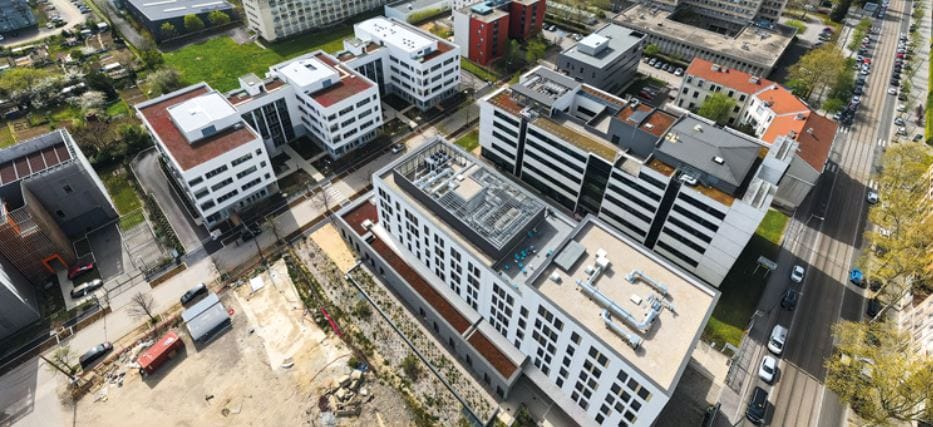
Developed by SERL, a local real estate company, on behalf of the Metropolis of Lyon, Bioparc Lyon represents a high-tech park specialising in life sciences. Situated in Lyon’s 8th arrondissement, the park’s construction began in 2000 and continues to expand with new buildings. The premises within Bioparc Lyon include the Adénine building (7,300 sq m / 78, 578.8 sq ft), the Médicina health platform (6,000 sq m / 64,580 sq ft), and the Bioserra 1 (7,000 sq m / 75,350 sq ft) and Bioserra 2 (5,000 sq m / 53,800 sq ft) facilities.
The latest addition to the hub is Quanta, a 7,000 sq m (75,350 sq ft) project scheduled for completion at the end of 2023. Dedicated to digital healthcare, Quanta will house laboratories specifically tailored for biotech research.
The proximity of the metro stop, situated just opposite the hub, ensures convenient accessibility, placing it within a 15-minute reach from Lyon’s two main train stations and Lyon Saint-Exupéry International Airport. With its thriving life sciences ecosystem, Lyon represents a powerhouse in the fields of healthcare and biotechnology, supported by robust infrastructure, research institutions, and a vibrant community of companies, researchers, and experts. These factors combined with the city’s strategic positioning within the Auvergne-Rhône-Alpes region solidify the city’s status within the life sciences sector in France.