

The life sciences real estate sector has evolved significantly in recent years, with investors increasingly drawn to its strong demand fundamentals and the sticky tenant relationships. Interestingly, another high-growth segment of operational real estate—data centres—shares many of the same characteristics, from specialised infrastructure needs to the deep technical expertise required to manage them. While life sciences facilities are purpose-built to house specific industry activities like research and manufacturing, data centres serve as critical digital infrastructure that powers virtually every sector of the modern economy, from enterprise computing to cloud services. Despite their different roles, these specialised real estate segments reveal compelling similarities that deserve deeper analysis.
Operational complexity and expertise
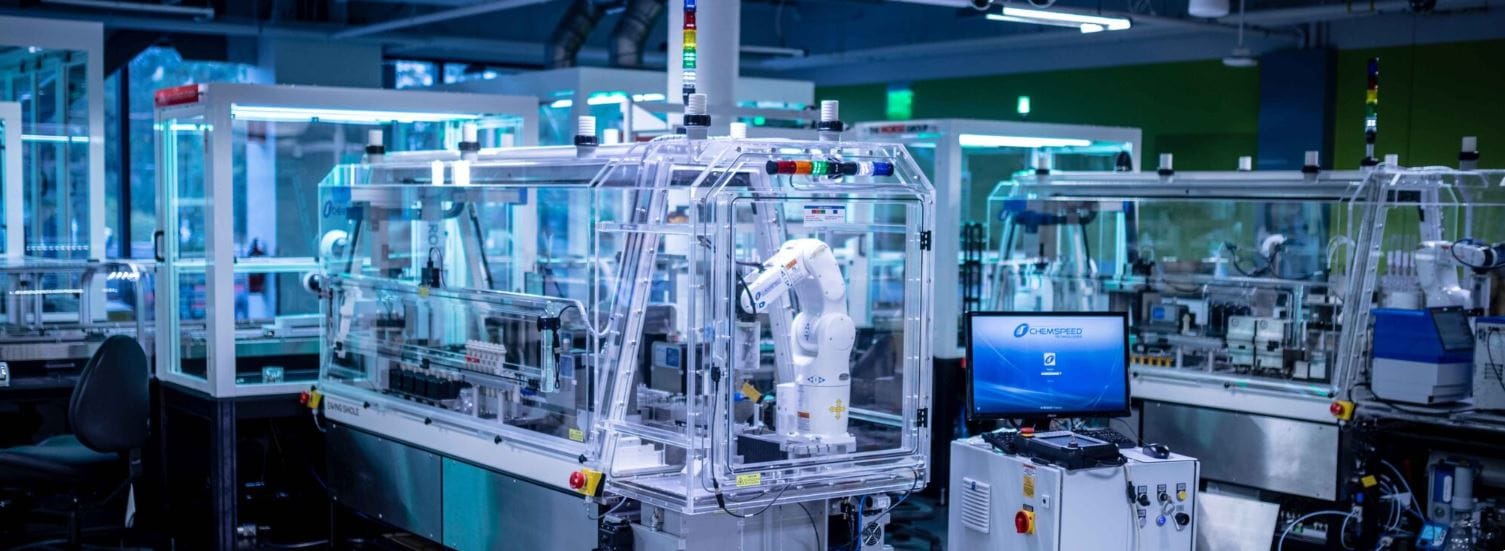
Both life sciences facilities and data centres represent highly specialised forms of operational real estate (OpRE), requiring deep knowledge far beyond traditional property management. Life sciences buildings demand intricate understanding of laboratory specifications, clean rooms, and complex ventilation systems. Similarly, data centres require expertise in power distribution, cooling infrastructure, and network connectivity. This specialisation means that successful investment in either area demands deep sector-specific knowledge and active management approaches.
Types of data centres
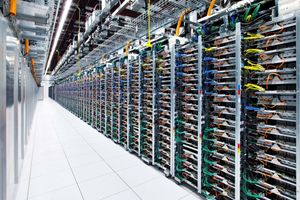
Companies access data centre infrastructure in different ways based on their needs, scale, and capabilities. Large enterprises may operate their own data centres, hosting IT infrastructure internally for greater control over security and compliance. Many organisations leverage public cloud infrastructure, accessing shared resources through major providers like AWS, Google Cloud, and Microsoft Azure - these providers operate massive hyperscale facilities as well as smaller edge data centres optimised for performance.
For businesses seeking a middle ground, managed data centres and colocation facilities offer flexible solutions - companies can either lease hardware and management services or simply rent space while maintaining their own equipment. This diversity of options ensures that organisations of all sizes can access the digital infrastructure they need, whether for primary operations, backup, or disaster recovery.
Resource-intensive operations and sustainability challenges
Life sciences facilities are among the most energy-intensive buildings, requiring precise environmental conditions for research, manufacturing, and storage. Ultra-low-temperature freezers, high-powered fume hoods, and autoclaves all contribute to substantial electricity and water consumption. These sustainability challenges are now under increased regulatory scrutiny, with new efficiency mandates emerging across Europe.
A parallel challenge exists in the data centre sector, where large-scale computing loads drive exceptionally high energy demands. AI workloads, in particular, are accelerating power consumption, with some AI models requiring as much energy to train as hundreds of households use in a year. Both life sciences and data centres are now adapting to new environmental regulations, such as Germany’s Energy Efficiency Act (EnEfG), which requires large facilities to integrate waste heat recovery. Investors in both sectors will need to navigate these sustainability pressures while balancing operational resilience with environmental responsibility.
The AI revolution as a transformative force
Artificial intelligence has become a central force reshaping both sectors in profound ways. For data centres, AI is driving unprecedented demand for computational infrastructure, with major technology companies significantly increasing their AI-related capital expenditure.
For life sciences facilities, AI is transforming drug discovery and development processes, which could substantially reduce research and development timelines. This technological advancement is reshaping laboratory spaces, with an increasing proportion of floorplans dedicated to computational research alongside traditional wet labs. The convergence of biological and computer sciences is creating new demands for hybrid spaces that can accommodate both traditional laboratory work and computationally intensive activities.
Investment characteristics and market dynamics
From an investment perspective, both sectors share characteristics that make them attractive in current markets. They often feature long-term leases with high-quality tenants, strong cash flow potential, and significant barriers to entry. Much like leading biotech and pharma hubs, data centre investment is shaped by clustering effects, where access to key infrastructure, skilled talent, and regulatory advantages create lasting competitive advantages.
Brookfield and Blackstone, the world’s two largest real estate investment managers, have emerged as major players in both life sciences real estate and data centres. Brookfield, through ARC Advanced Research Clusters, has expanded its footprint in Europe’s life sciences sector, while Blackstone’s BioMed Realty provides lab space on both sides of the Atlantic. At the same time, both firms have aggressively invested in data centres. For example, in 2023 Brookfield acquired Compass Datacenters in a joint venture with Ontario Teachers' Pension Plan and in 2024 funds managed by Blackstone, along with the Canada Pension Plan Investment Board, bought AirTrunk, Asia-Pacific's leading data centre platform.
As AI and biotech increasingly converge, their dual focus on these asset classes highlights a strategic bet on the future of innovation-driven real estate.
Europe's leading data centre locations
The data centre sector in Europe continues to expand, with total EMEA capacity projected to reach 21 gigawatts (GW) by the end of 2024.
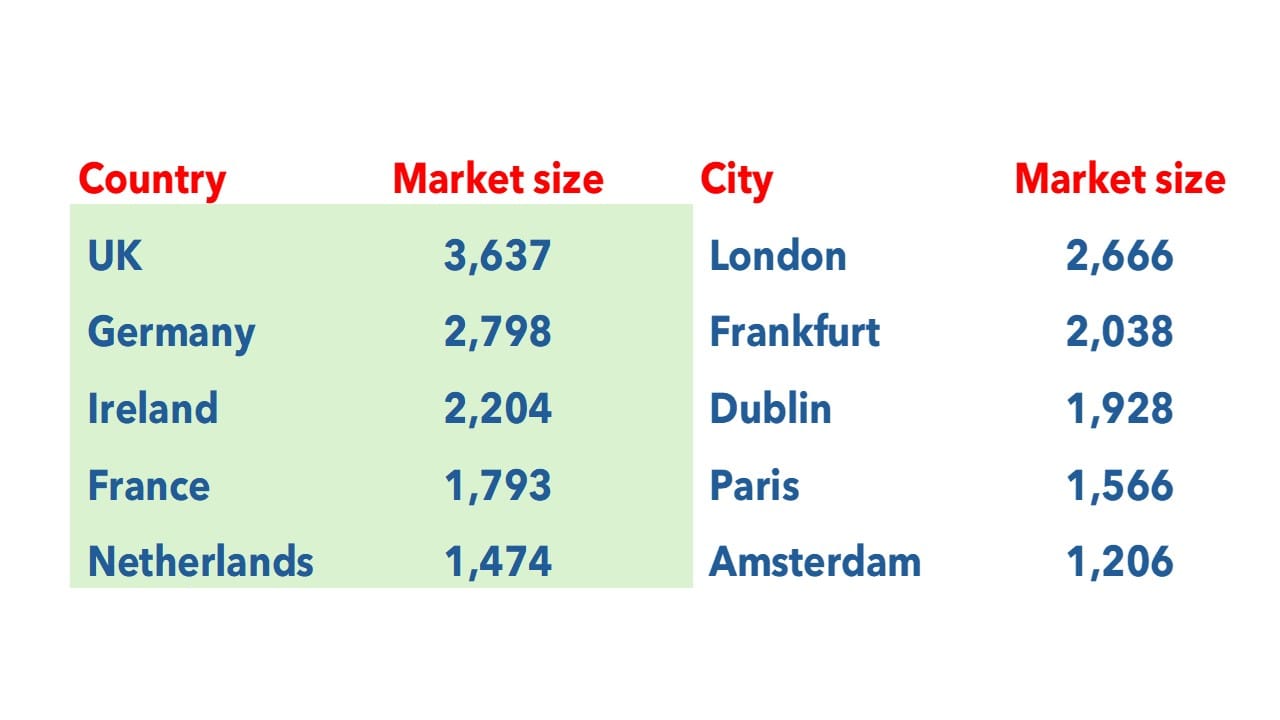
The acronym FLAP-D is sometimes used to describe the top five cities. As established markets like London and Frankfurt remain dominant, constraints on land and power availability have led to increased investment in emerging clusters such as Helsinki and Cardiff-Newport.
Growth prospects for Europe and EMEA
Currently accounting for 20% of global data centre capacity by power consumption, EMEA's data centre sector is set for significant expansion. Since the global industry is projected to add 63 GW of new capacity in the coming years according to Omdia, development in EMEA faces unique hurdles, including government restrictions and moratoriums in certain cities aimed at conserving resources like water and power. Nonetheless, the region remains integral to the broader global data centre growth story, driven by increased AI adoption, continued cloud migration, rising internet usage, and the proliferation of data-generating devices.
Challenges ahead
These similarities extend to shared challenges. Both asset classes face:
- Risk of obsolescence from rapid technological advancement
- Intensive capital expenditure requirements
- Environmental sustainability pressures
- Specialised tenant pools
- Complex regulatory environments
Data centres and real estate structures
Digital Realty (DLR) is structured as a Real Estate Investment Trust (REIT) since data centres fundamentally qualify as real estate assets - they are specialised buildings that house computing infrastructure. The data centre buildings, power infrastructure, cooling systems, and the land they sit on are all qualifying real estate assets under REIT rules, even if the business is technology-focused. Other big players in this field include:
- Equinix: operates as a REIT, focusing on data centre facilities.
- CoreSite: initially a standalone REIT, it was acquired by American Tower, which is also structured as a REIT.
- Iron Mountain: primarily known for secure storage, it has diversified into data centers and operates as a REIT.
Comparing investment scale
The scale of investment required in these specialised real estate segments is striking. Digital Realty Trust (DLR) and Merck illustrate how companies focused on different sectors can have remarkably similar real estate footprints. While Merck's portfolio consists of highly specialised research and manufacturing facilities purpose-built for life sciences, DLR's assets comprise the digital infrastructure that powers countless businesses across sectors. Despite serving distinct purposes, their balance sheets reveal similar patterns of long-term capital investment in complex, technical real estate assets.
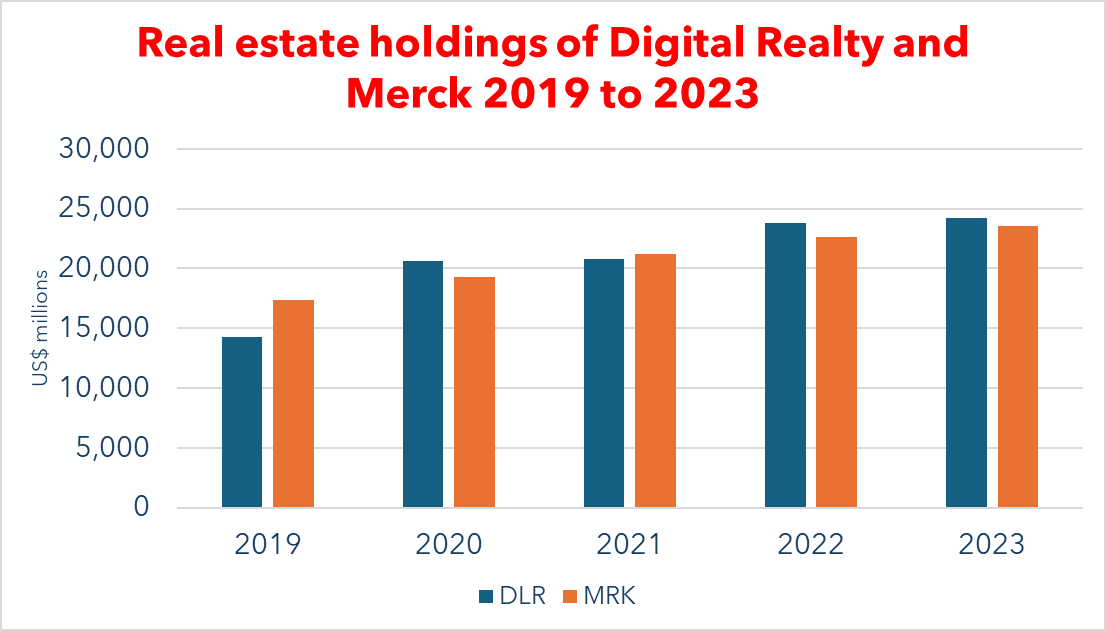
Though life sciences facilities and data centres may serve distinctly different primary functions, their underlying real estate characteristics show notable similarities. As both sectors continue to evolve, success will increasingly depend on balancing growth with efficiency and environmental responsibility. This convergence offers valuable insights for investors considering exposure to these expanding sectors.